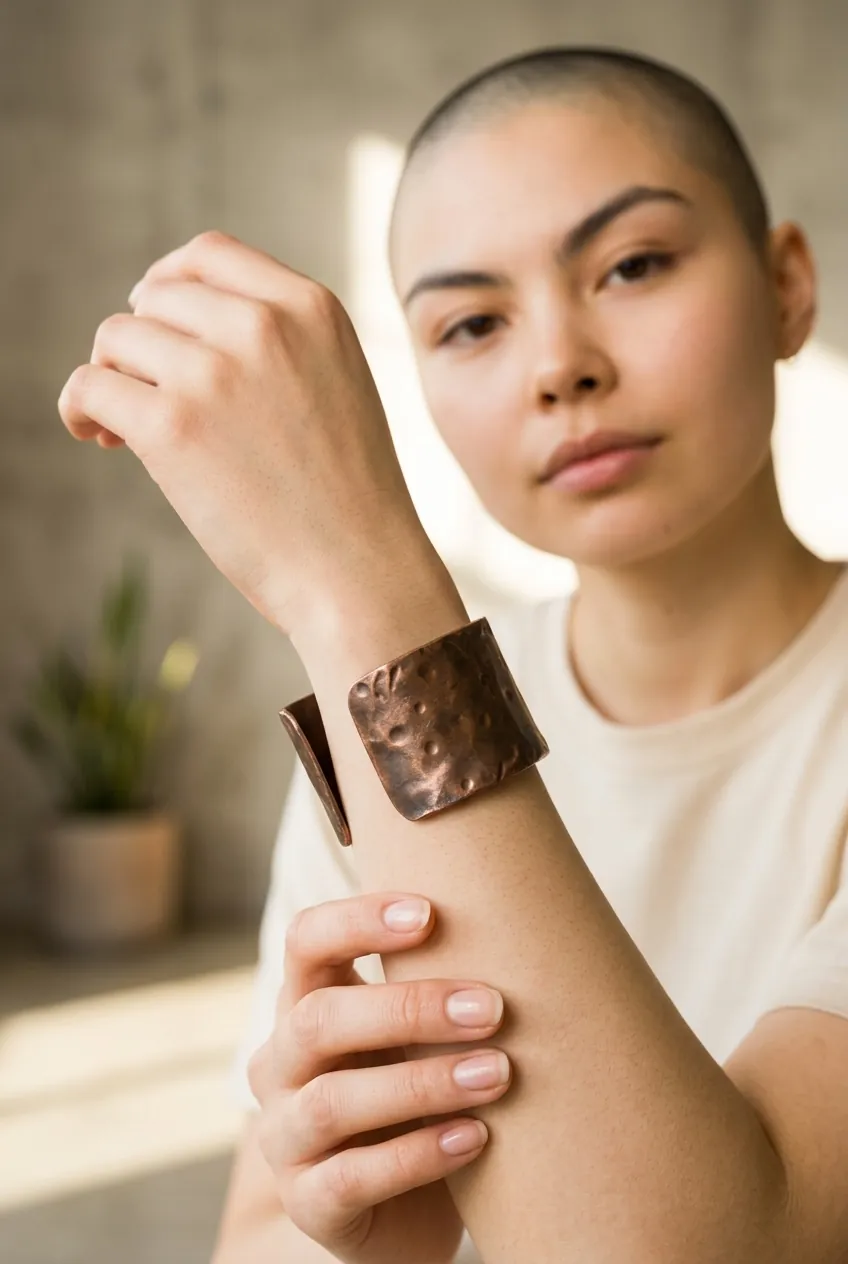
Copper is not meant to stay frozen in one finish. It responds to air, moisture, the natural oils on your skin, and the small routines of daily wear. That response can look like a deeper brown, a softer glow, or a little green residue after a warm day. The Copper Development Association explains copper's natural surface change as it reacts with its environment. The change is part of the material, not proof that a piece has been neglected.
That is why the best way to clean copper jewelry is usually the least dramatic one. Start by deciding what you want to remove. If it is ordinary dust, skin oil, or a fingerprint, a soft dry cloth may be all the work the piece needs. If the surface has become uneven in a way you do not enjoy, you can move carefully to a mild rinse and a light polish. The goal is not to make every piece look factory-new. It is to keep it comfortable to wear and true to the character you chose.
Begin by reading the piece
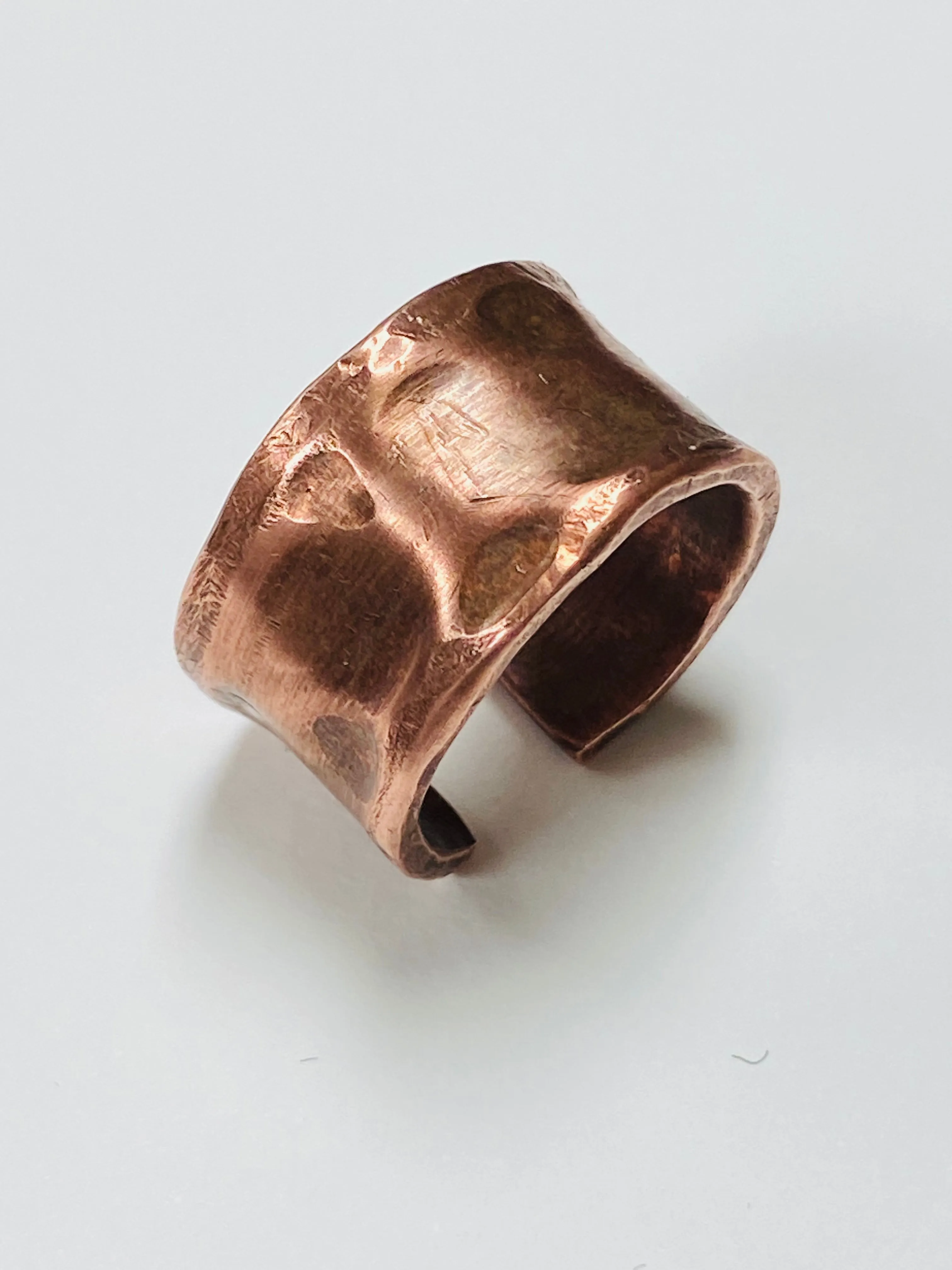
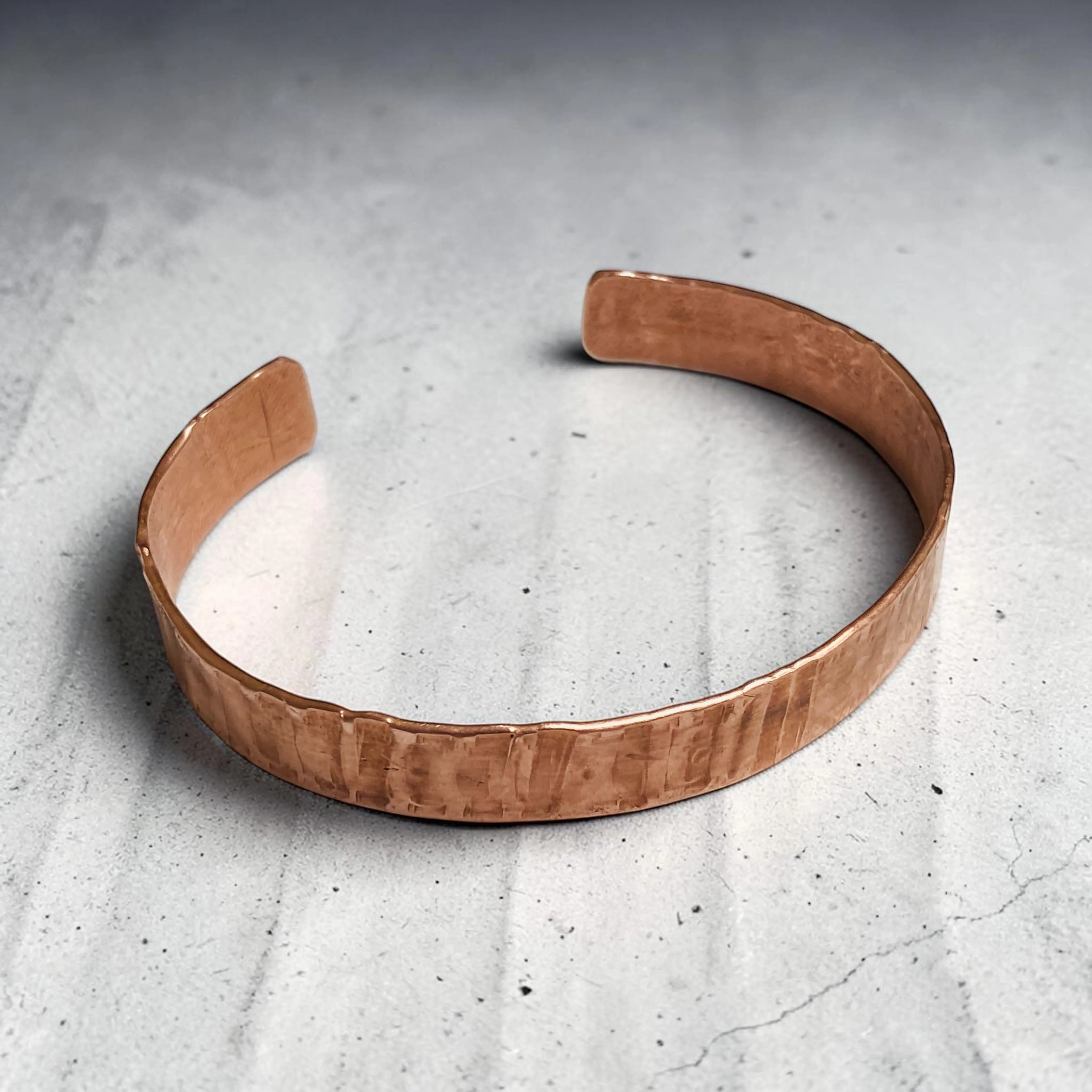
Before reaching for a cleaner, look closely at the jewelry. Is it plain raw copper, or does it include stones, a plated finding, an intentionally darkened detail, a coating, or a delicate wire element? Bare copper can handle more than a mixed-material piece. A ring with a smooth open surface is different from an earring with a plated hook. A bracelet with deep hammer marks needs a little more patience because residue can settle into the texture.
Also notice whether you are looking at tarnish, dirt, or a finish you actually like. Tarnish is simply a surface reaction. A darkened area can give a handmade piece depth, especially where the metal has been hammered or shaped. Removing it is a style choice, not a requirement. The Canadian Conservation Institute's metal-care guidance makes the same useful distinction: repeated abrasive polishing removes surface material. For jewelry you wear often, that is a good reason to clean only as much as needed.
Step 1: Start dry
Lay a soft, clean cloth on a flat surface and place the jewelry on top. A microfiber or other soft lint-free cloth is ideal. Gently wipe the piece with light pressure, turning it as you go. This first pass removes dust, skin oil, and everyday residue without adding moisture or changing the surface.
Work slowly around hammered marks, edges, and joins. Do not use a scouring pad, a stiff brush, or a rough paper towel. Copper is a relatively soft metal, and an aggressive tool can leave marks that look sharper than the handwork you meant to preserve. When the cloth comes away clean and the piece already looks better, stop there. Care does not earn points for being elaborate.
Step 2: Use mild soap only when the piece needs it
When dry wiping does not lift the residue, mix a small amount of mild dish soap with lukewarm water. Dampen a soft cloth, then wring it out well. The cloth should be barely wet, not dripping. Wipe the copper gently, avoiding long soaking and paying attention to any part that is not copper.
Follow with a second cloth dampened with plain water to remove soap, then dry immediately with a fresh soft cloth. Let the piece sit in open air until you are sure it is completely dry before putting it away. A careful wash like this is the right middle ground for most day-to-day cleaning. It removes grime without chasing every bit of natural darkening from the surface.
Step 3: Brighten bare copper with care
For a plain, bare-copper piece that you want to brighten, a brief touch of a mild acidic cleaner can lift surface tarnish. Common household methods use lemon or white vinegar with salt. They work because the acid reacts with the tarnish, but that does not make them a universal answer. Before using a stronger method, check whether the jewelry is lacquered or plated, because those surfaces need gentler care.
If you choose to try a home method, spot-test an inconspicuous area first. Use a tiny amount on a soft cloth, work lightly, then rinse and dry the jewelry right away. Do not leave a mixture sitting on the metal. Do not use this method on a piece with stones, plated sections, glued parts, or a finish you want to keep. And do not use a lemon half as a scrubber on textured jewelry. Salt crystals can be abrasive, which is exactly the sort of force that wears down a surface over time.
Know when not to polish
There are several moments when the right choice is to leave the copper alone. If you love the deeper tone that has developed, that is your finish. If the piece has a deliberate antiqued area, polishing may remove contrast that was part of the design. If you see a coating lifting, a stone moving, a crack, or green material collecting in a join, set the piece aside and contact the maker instead of trying to solve it with a stronger cleaner.
Green residue on the skin deserves a measured response too. Copper can react with sweat, lotion, fragrance, and moisture. Wash your skin and dry the jewelry after wear. If your skin becomes irritated, stop wearing the piece and seek advice from a qualified health professional. Jewelry care can handle the surface. It should never be used to make promises about how a material will behave on every person.
Store it dry and give it breathing room
Good storage reduces how often you feel the need to clean. Take copper jewelry off before swimming, showering, exercise, or applying lotion and fragrance. Wipe it dry at the end of the day. Store each piece in a dry place where it will not knock against harder jewelry or tangle with chains and hooks.
A small soft pouch or lined box works well. Avoid leaving a piece in a damp bathroom, on the edge of a sink, or inside a wet travel bag. You cannot stop copper from changing completely, and there is no reason to try. You can slow the messier kinds of change by keeping moisture and residue from sitting on the surface.
A simple routine for regular wear
For most customers, this routine is enough: wipe the piece with a dry soft cloth after wearing it, store it dry, and use a lightly damp soapy cloth only when regular wiping is not enough. Save a tarnish-brightening treatment for the occasions when you genuinely want a lighter look. That rhythm respects raw copper, keeps cleaning low-stress, and makes it easier to notice when a piece needs a maker's eye instead.
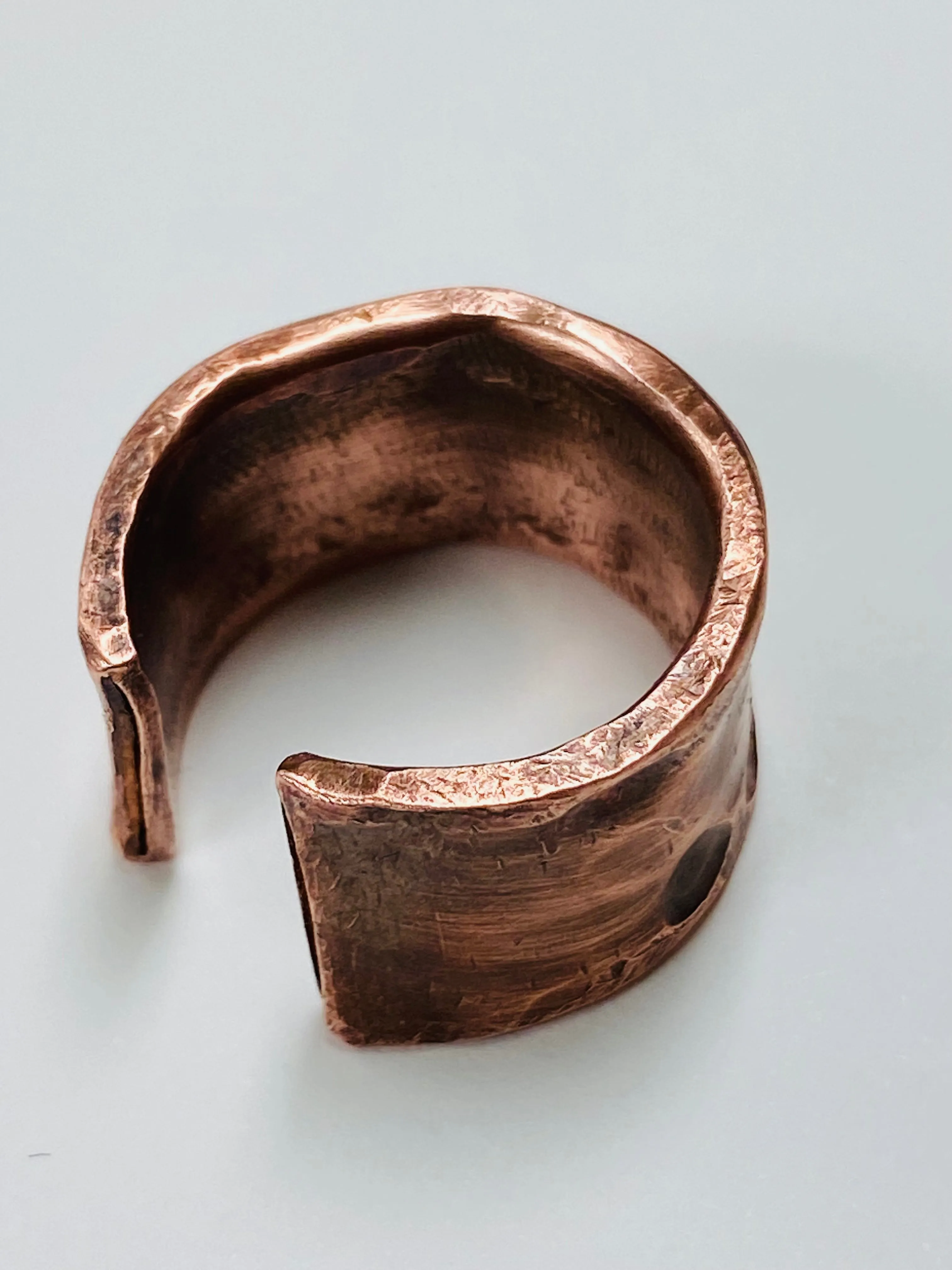
The same approach applies across rings, cuffs, and earrings, but the form changes the details. Rings meet more hand lotion and water. Cuffs can collect residue where they rest against skin. Earrings may include findings made from another metal. Slow down at joins, settings, and non-copper components. A little attention there prevents the kind of over-cleaning that cannot be undone.
What to avoid when cleaning copper jewelry
Avoid treating every bit of darkening as a problem to solve. Copper is expressive precisely because it changes. Household cleaners that promise instant shine often work by being more abrasive or more reactive than a handmade piece needs. Skip bleach, ammonia, abrasive powders, rough metal polish, and unknown jewelry dips. They can create a harsh, uneven result, especially on a textured surface. A bright result that feels wrong to you is still the wrong result.
Be cautious with baking soda too. It is often suggested as a gentle kitchen cleaner, but its fine grit can still act like a mild abrasive. On a sturdy bare-copper object that may be acceptable. On a ring, cuff, or earring with visible handwork, repeated rubbing can soften the small changes in surface that make the piece distinct. Start with a cloth. Move to mild soap only when you need it. Reserve a spot treatment for bare copper and use a very light hand.
How often should you clean it?
There is no fixed schedule. Clean copper jewelry when it has picked up residue, feels dull in a way you do not enjoy, or needs a little attention before you put it away. A piece worn every day may benefit from a dry wipe every few wears. A piece kept for occasional use may only need a quick look before you wear it again. Regular gentle attention prevents the urge to reach for a heavy cleaning session later.
Think of care as part of wearing the piece, not a correction for getting it wrong. Your routine, climate, skin chemistry, and the products you use all leave their own small traces. Some customers prefer a freshly bright surface. Others wait for the copper to settle into a deeper tone. Both are valid. The useful rule is simple: clean for comfort and enjoyment, not to make raw copper behave like a material it is not.
A quick before-you-clean checklist
Take a moment to gather what you need before you begin: two soft cloths, a small bowl of lukewarm water, and a tiny amount of mild soap. Keep a dry towel nearby. Look for any stones, plated hooks, coatings, or loose parts. Decide whether you are removing everyday residue or trying to brighten bare metal. Those small decisions make the process calmer and protect a piece from a treatment that was never necessary.
When in doubt, do less. Clean one small area, dry it, and look at the result in natural light. If the surface feels right, there is no need to continue. If you are still unsure, leave the piece as it is until you can ask about it. The best care routine is the one you can repeat without turning a familiar piece into an experiment.
Use the same patience when a piece has a lot of texture. Hammered dimples and folds catch light beautifully, but they can also hold onto lotion or dust. Fold a soft cloth over a fingertip and guide it through the surface instead of pressing harder. Let the cloth do the work. A short, calm pass is more useful than vigorous rubbing, and it leaves the visible handwork where it belongs.
How Yavaworks helps
Yavaworks makes raw copper jewelry to keep the warmth and visible handwork of the material close. The pieces are not designed to look identical forever, and that is part of their appeal. For general care, start with the site's copper care notes. For a question about a particular piece, its fit, or a cleaning method you are considering, contact Yavaworks before trying something more aggressive. You can also browse the current collection to see the forms currently available.
Frequently asked questions
Can I clean copper jewelry with vinegar?
Vinegar is acidic, so it can brighten bare copper quickly. Use it with restraint, do not soak a piece that includes other materials, and rinse and dry it fully. When you are not sure how a piece was finished, begin with a dry cloth or ask the maker before using any liquid cleaner.
Should copper jewelry stay bright and shiny?
Not necessarily. Raw copper naturally deepens, darkens, and develops warm variation as it is worn. A clean piece does not have to look freshly polished. The right stopping point is the one that feels good to you and still respects the handmade surface.
Why does copper jewelry leave a green mark on skin?
Copper can react with moisture, skin oils, and products on the skin. A temporary green mark is usually residue from that reaction, not a sign that the piece needs aggressive polishing. Wash the skin with soap and water, dry the jewelry after wear, and pause wearing it if you notice irritation.
Can I wear copper jewelry in the shower or pool?
It is best to take raw copper jewelry off first. Water, soap, chlorine, and personal-care products can speed up surface change and leave residue in texture or crevices. Dry storage between wears gives the material a calmer, more predictable life.