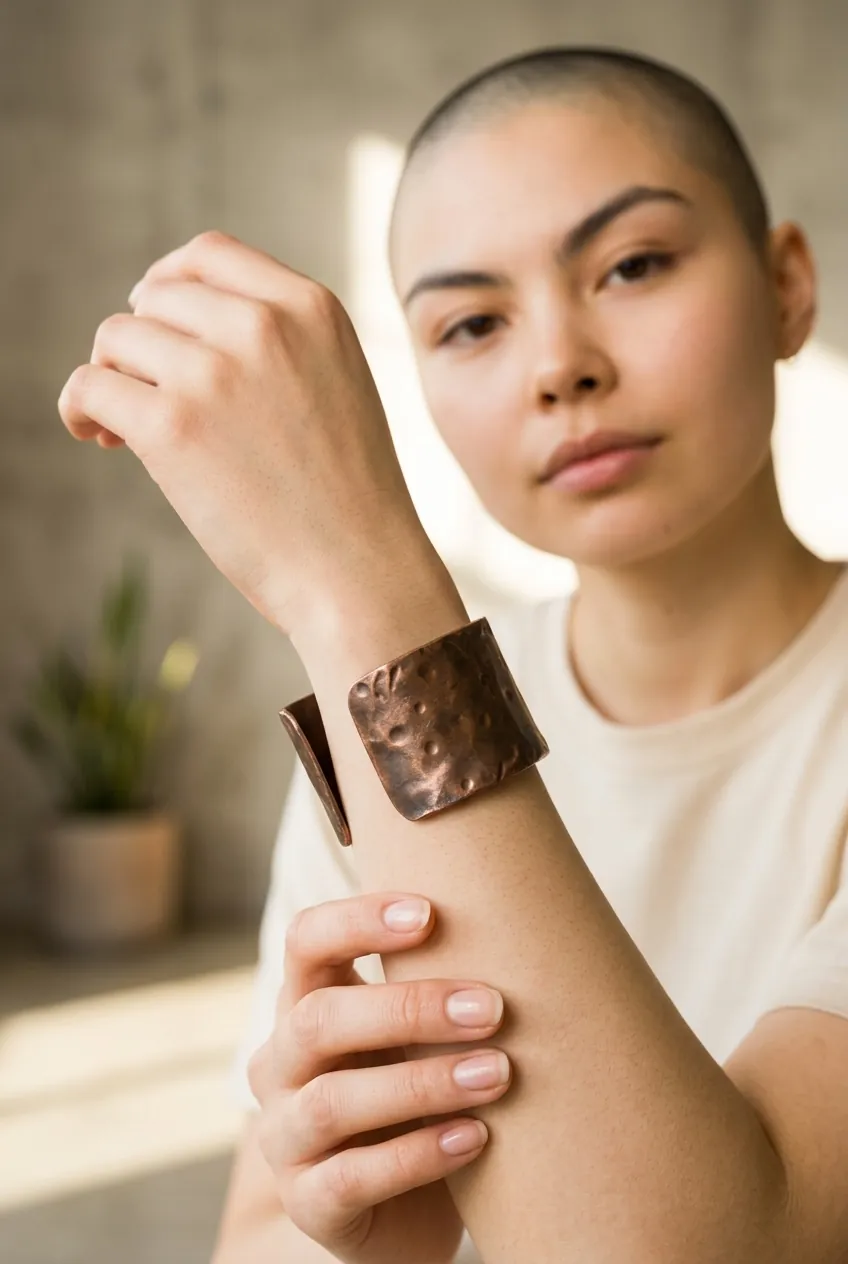
Raw copper is made for a life in motion. It warms against skin, gathers small traces of the day, and gradually settles into its own deeper tone. That is not a failure of the material. Copper reacts to air, moisture, skin oils, and the things it meets in ordinary wear. The Copper Development Association's overview of copper's properties is a useful reminder that surface change is part of how the metal behaves.
The aim of copper jewelry care is not to keep a handmade piece frozen in its first-day finish. It is to keep it comfortable, clean enough for the way you wear it, and protected from the few conditions that create needless residue or wear. A short routine after wearing, thoughtful storage, and a little restraint with cleaning products go a long way.
Start with the finish you actually want
Before making a care plan, look at the piece in natural light. Do you like the warm shine it has now? Are you drawn to the darker areas settling into hammer marks and edges? Or has lotion, soap, or a day of activity left a film that feels different from natural change? Those are different situations, and they deserve different responses.
Raw copper can deepen from bright orange-pink to brown, red, or a softer matte tone. That variation often makes visible handwork feel more present. A clean piece does not have to look newly polished. The right stopping point is the one that feels good to wear and still looks like the piece you chose.
Build a small after-wear habit
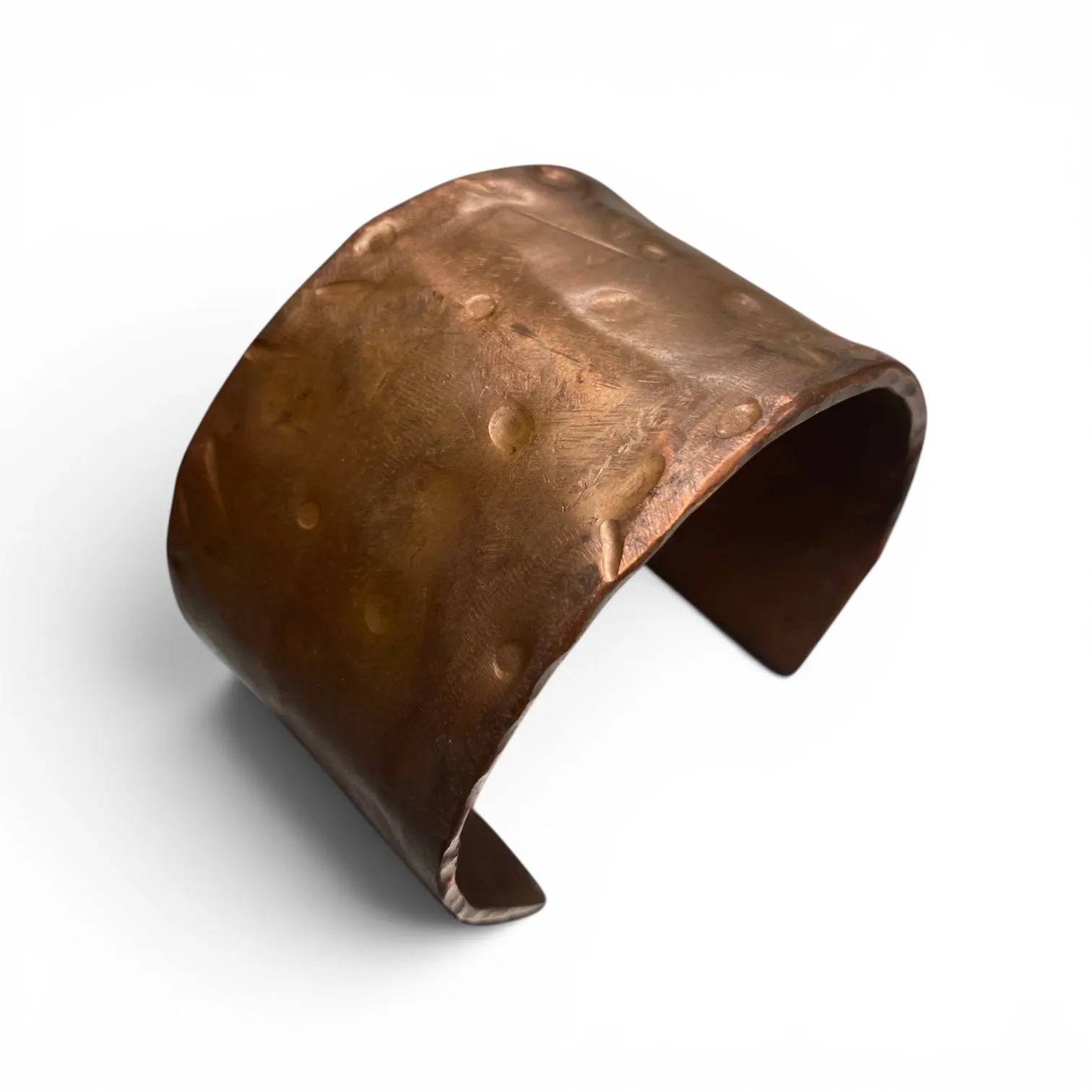
The simplest care happens after you take the piece off. Use a soft, dry, lint-free cloth to wipe away moisture, fingerprints, lotion, and ordinary skin oil. Take a little extra time around hammered texture, bends, and joins, where residue can rest without being obvious. You do not need pressure. A quiet pass with the cloth is enough for most days.
This small habit is especially helpful for rings and cuffs. They meet hand lotion, water, and work surfaces more often than earrings or pendants. It also keeps you from feeling that every change in color needs a bigger cleaning session. When a piece is dry and free of residue, it can keep developing its natural surface at its own pace.
Keep the cloth dry. Rough paper towels, scouring pads, and heavily treated polishing cloths can be too aggressive for a textured handmade surface. The Canadian Conservation Institute's guidance on metal objects notes that polishing is inherently abrasive, which is a good reason to use the lightest method that works.
Choose your moments to remove it
Copper does not need to be treated as fragile, but it benefits from stepping aside for wet or chemical-heavy moments. Take it off before showering, swimming, using a hot tub, working out hard, cleaning, or doing dishes. Chlorine, prolonged moisture, sweat, soap, and household cleaners can speed surface change and leave residue in texture.
Put jewelry on after lotion, sunscreen, fragrance, hair products, and makeup have had a moment to settle. This is a useful habit for any jewelry, and it matters more with raw copper because those products can sit directly between the metal and skin. It also gives a ring or cuff a cleaner start to the day.
There is no need to be rigid about a quick hand wash or a humid afternoon. Think in terms of exposure rather than perfection. If a piece gets wet, dry it when you can. If you expect a long, sweaty hike or an afternoon in the pool, leave it somewhere safe first.
Store it dry, separate, and easy to reach
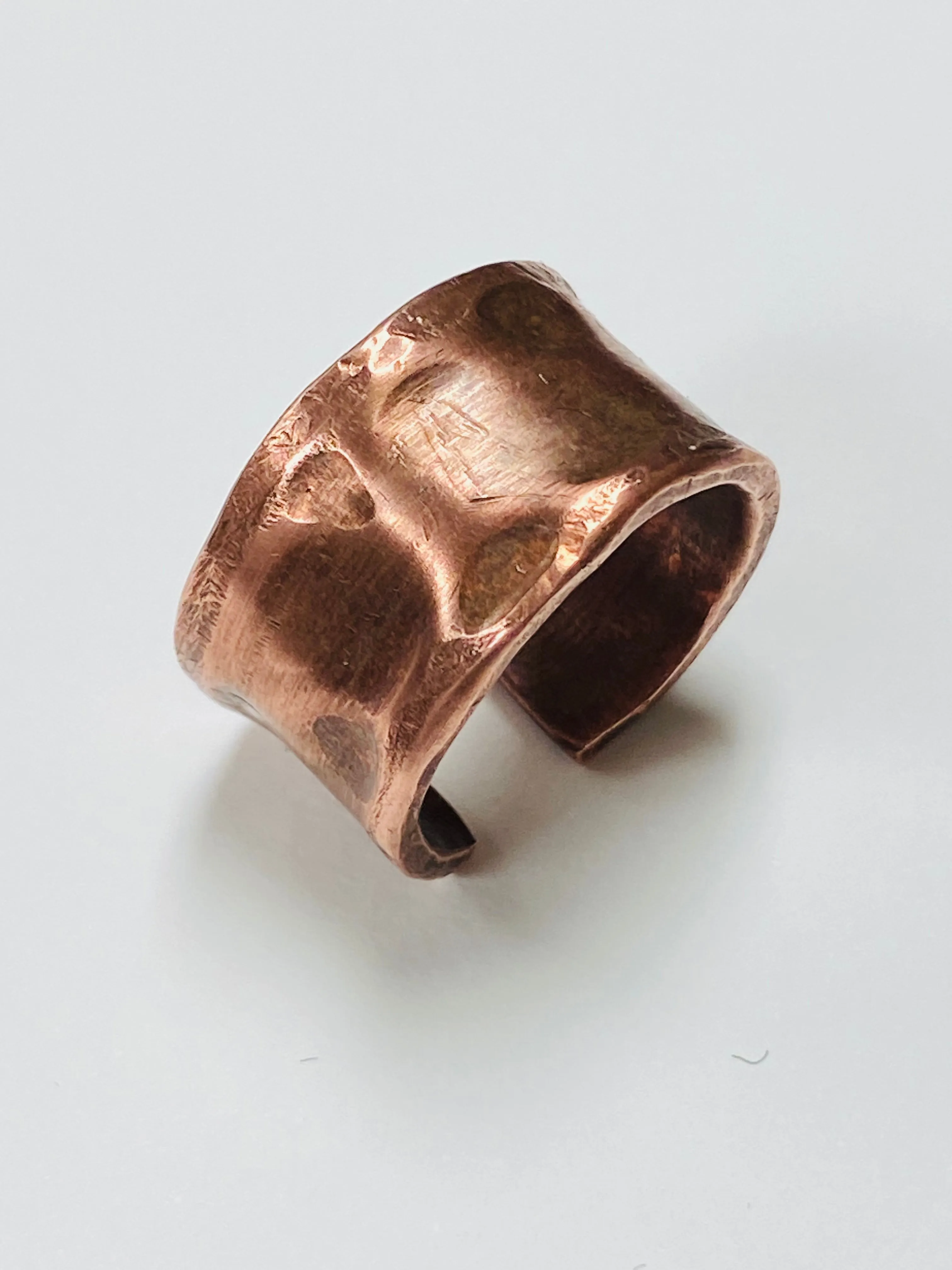
Good storage makes care easier because it prevents the problems that lead to over-cleaning. Once a piece is dry, put it in a soft pouch, a lined jewelry box, or another dry place where it will not rub against harder jewelry. Keep rings, cuffs, and earrings separated when possible, particularly if a piece has a textured or shaped surface.
A bathroom counter, a sink edge, and the bottom of a damp travel bag are poor homes for copper. They bring together moisture, residue, and the chance of a piece being scratched or knocked against something else. A small pouch tucked into a dresser or a dry travel case is more than enough. The best storage system is the one you will use consistently.
If you are traveling, wipe the piece before packing it and make sure it is dry. Bring a soft cloth in the same pouch for a quick wipe before you put it on again. That is a calmer and more reliable approach than trying to restore a finish after a piece has been jostled around with other accessories.
Know the difference between care and cleaning
Everyday care is about what you do before residue builds up: wiping, drying, removing the piece for wet work, and storing it thoughtfully. Cleaning is for the moments when a dry cloth is no longer enough. Most raw copper jewelry does not need more than a lightly damp soft cloth and a tiny amount of mild dish soap, followed by a careful rinse and full dry.
When you do clean, avoid soaking the piece. Work with a barely damp cloth rather than a dripping one, especially if the jewelry includes a stone, a plated component, a coated area, or a delicate join. If you are not sure what a piece includes, begin with the gentlest option. Our guide to cleaning copper jewelry walks through that process in more detail.
Skip bleach, ammonia, unknown jewelry dips, rough powders, and anything that asks you to scrub hard. A quick shine is not worth flattening the texture that makes a handmade surface feel alive. If a piece has a crack, lifting finish, loose stone, or residue collecting in a join, stop and ask the maker before trying a stronger method.
Let natural change stay natural
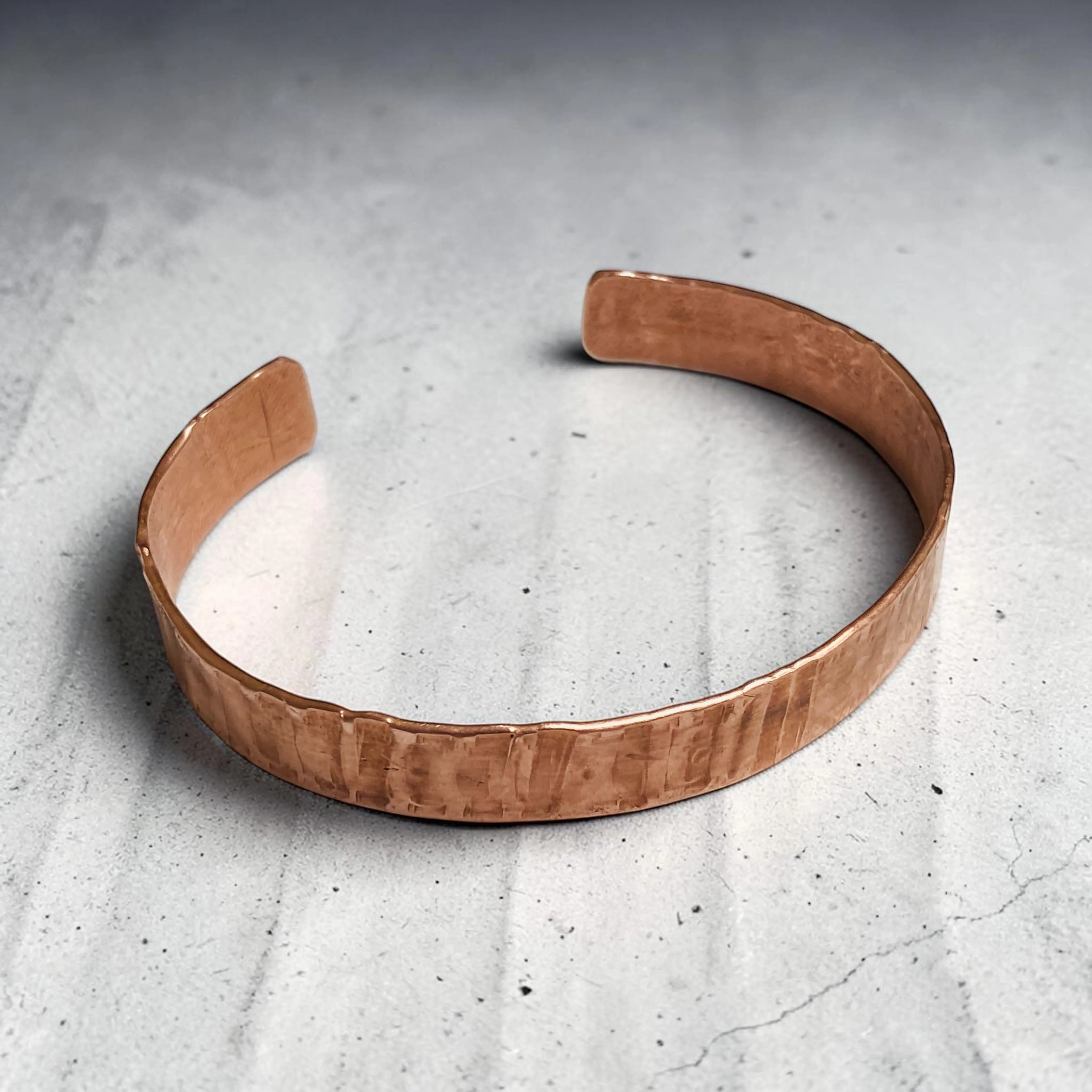
One of the pleasures of raw copper is that it does not look identical on every customer or every day. Climate, skin chemistry, activity, and personal-care products all change the way the surface settles. Some customers love a brighter copper tone. Others wait for the deeper color that comes with regular wear. Both are honest ways to live with the material.
A green mark on skin can happen when copper meets moisture, oils, or products. It is usually surface residue and can be washed away with soap and water. A green mark is different from irritation. If your skin feels irritated, stop wearing the piece and seek advice from a qualified health professional. For most everyday marks, keeping both the jewelry and skin dry is the useful first response.
Do not feel pressured to seal a raw piece simply because it changes. A coating can keep a brighter finish for a time, but it also changes the relationship between the metal and wear. If that is what you want, ask about the specific piece first. Raw copper deserves a decision made for its own character, not a one-size-fits-all treatment.
A five-minute reset for the week
Once a week, or before putting a favorite piece away for a while, take five minutes to look it over. Wipe it with a soft cloth. Check around bends, hooks, and joins for trapped residue. Notice whether it is dry. Then return it to its pouch or box. This small reset helps you catch the moments when a piece needs a gentle clean rather than an aggressive rescue later.
It is also a chance to notice what you enjoy about the change. Maybe a cuff has become warmer where it rests against your wrist. Maybe a ring has settled into its texture in a way that makes the hammer marks stand out. Care works best when it helps you keep that character, rather than treating every trace of wear as a problem.
How Yavaworks helps
Yavaworks makes raw copper jewelry for customers who want the material's warmth and visible handwork close at hand. Browse the current collection for pieces that invite that kind of everyday wear, or read the broader copper care notes for a shorter reference. If you have a question about a particular piece, its fit, or a method you are considering, contact Yavaworks before using a more aggressive cleaner.
Frequently asked questions
How often should I clean copper jewelry?
There is no fixed schedule. Wipe a piece with a soft dry cloth after wear, then use a lightly damp cloth with mild soap only when ordinary wiping is not enough. Clean for comfort and residue, not simply because the copper has deepened in color.
Can I wear copper jewelry every day?
Many customers do. Remove it before swimming, showering, strenuous exercise, or work with chemicals, then let it dry fully before storage.
What is the best way to store copper jewelry?
Keep each piece dry, clean, and separate from harder jewelry. A soft pouch or lined box is a simple choice. Avoid damp bathrooms, wet travel bags, and places where pieces can rub against each other.
Should I seal raw copper jewelry?
A sealant changes both the feel and aging of bare copper. If preserving a bright finish matters to you, ask the maker about the specific piece before applying anything.