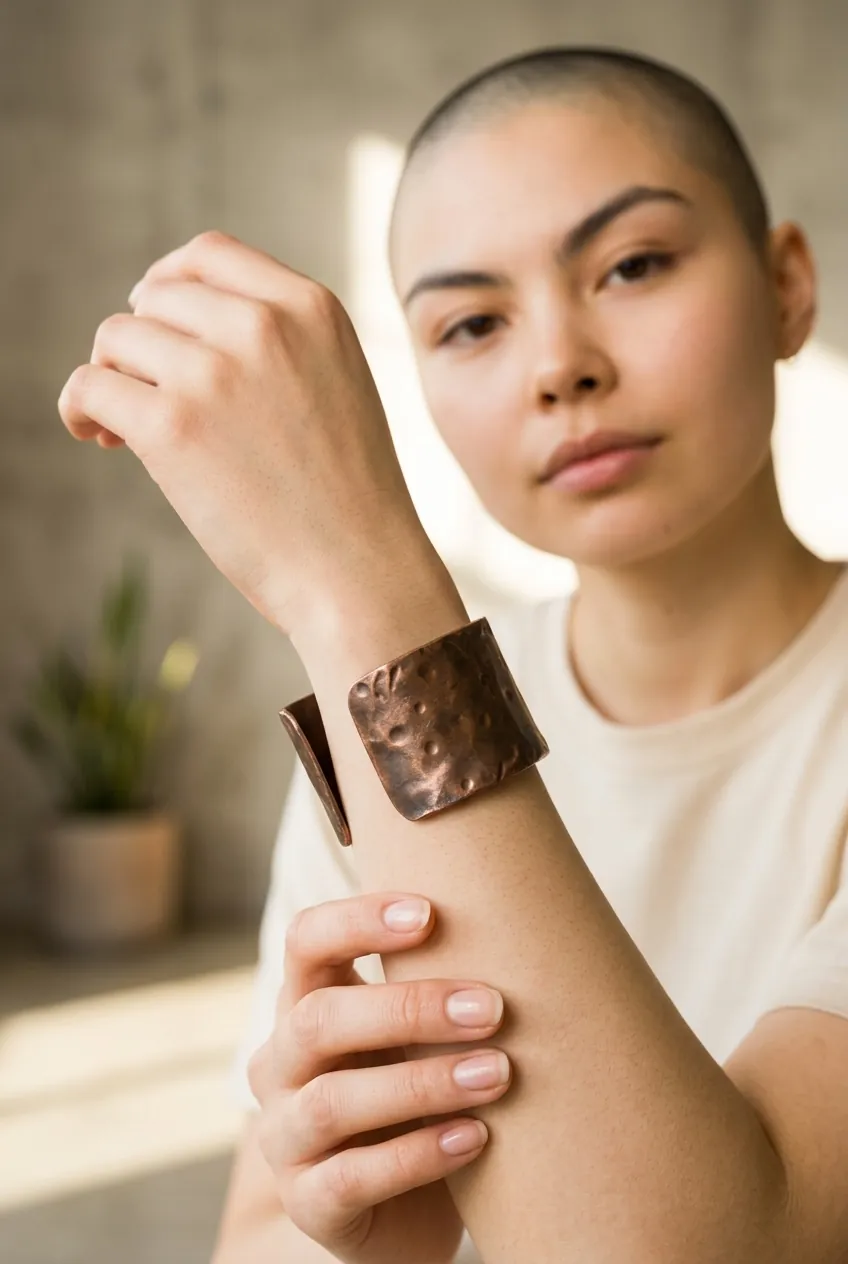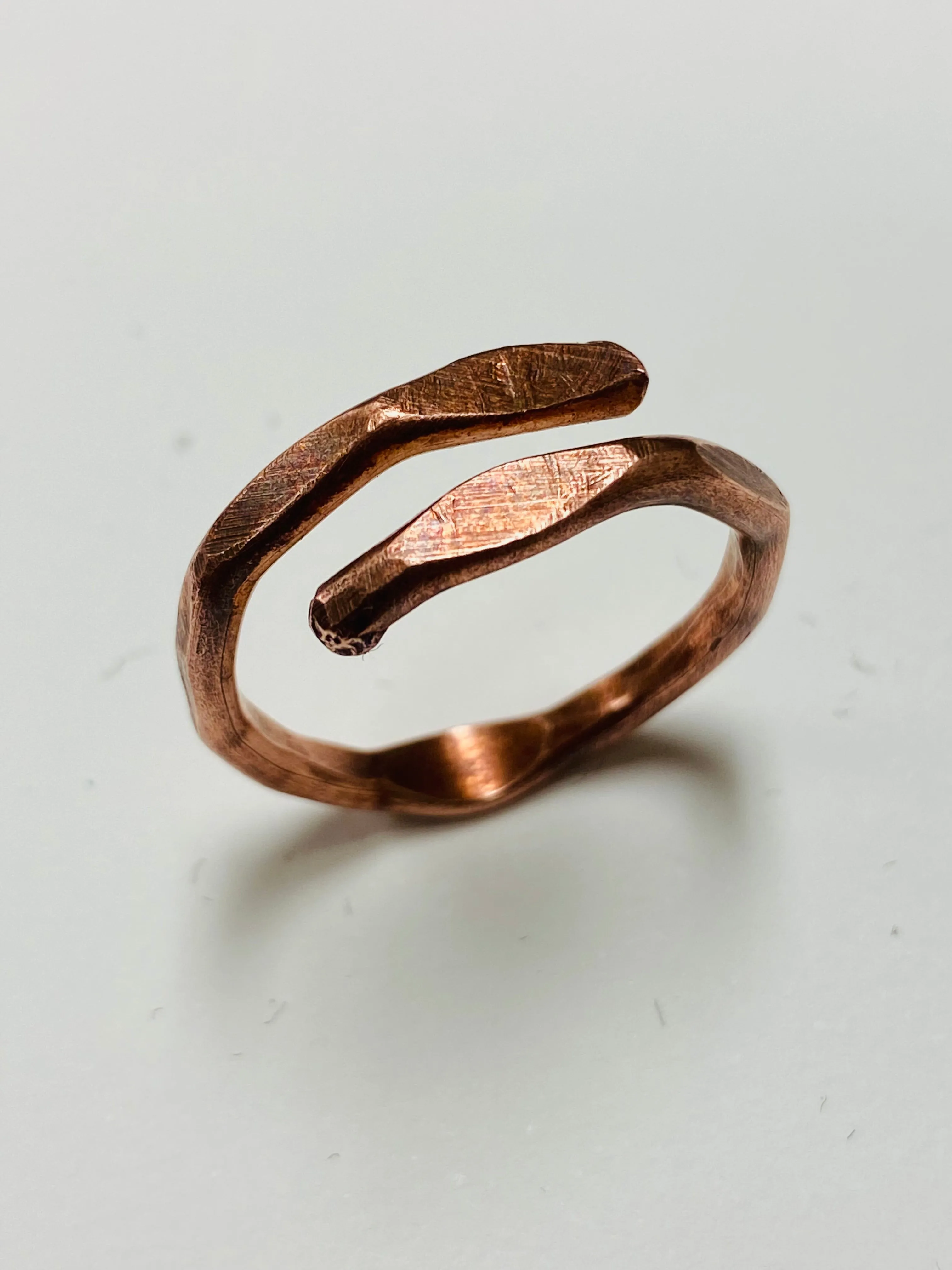
It is a familiar moment: you take off a copper ring or cuff and notice a soft green mark where the metal rested against your skin. The first instinct is often to wonder whether the piece is flawed, whether the metal is not real, or whether something is wrong. With raw copper, a little color transfer can simply be part of the material meeting a warm, lived-in day.
Copper is responsive. Air, moisture, salt, skin oils, lotion, fragrance, and the close contact of a ring or bracelet can all change what happens at its surface. That is not a promise that every customer will see green, and it is not a test of a piece’s quality. It is one of the reasons raw copper feels different from a surface that is designed to remain identical forever.
What the green mark is
Copper changes color when its surface reacts with the world around it. The familiar green patina on outdoor copper develops through reactions involving moisture and the surrounding atmosphere. The Copper Development Association describes how moisture helps drive that surface change. Jewelry does not live outdoors like a roof or sculpture, but it still meets moisture, air, and residue in a much closer setting.
On skin, the mark is usually a small amount of colored residue transferred from that surface reaction. It may look green, blue-green, or slightly dark depending on the piece and the day. A snug ring, the inside curve of a cuff, or the back of a pendant can create more contact than an earring that moves freely. The mark is usually easy to wash away with gentle soap and water. The copper itself may also deepen or soften in tone over time, which is a separate part of its visible story.
Why it happens more on some days
There is no single rule that predicts who will notice a green mark. Skin is not a controlled surface. A hot day, exercise, humidity, a close-fitting ring, or product left on the skin can all create a wetter environment around the metal. Sweat contains moisture and salts. Hand cream, sunscreen, soap, and fragrance can leave their own film. More moisture and more time in contact can mean more visible transfer.
That is why one customer can wear a cuff for weeks without seeing a mark while another notices one after an afternoon outside. Neither experience tells the whole story about the copper or the wearer. It simply reflects a different mix of routine, weather, fit, and contact. A piece that lies flat but has room to move may behave differently from one held tightly against the skin all day.
The finish matters too. Raw copper is meant to be seen and felt as copper. It is not the same as a heavily sealed surface. The handwork, hammer marks, and warm variation remain visible because the material remains present. That openness is part of the appeal, but it also means simple care goes further than trying to force the piece to stay unchanged.
A green mark is not a verdict on the piece
A green mark does not automatically mean a piece is fake, poorly made, or dirty. It also does not mean that every copper piece will do it. These shortcuts are tempting because the mark is so visible, but they flatten a small surface reaction into a big conclusion. Raw copper has character precisely because it responds over time.
What matters more is how the piece feels to wear and whether you enjoy its changing surface. If you prefer a brighter look, you can clean it carefully. If you like a deeper tone, there is no need to polish it away. The goal is not to make every ring and bracelet look factory-new. It is to keep it comfortable, clean, and true to the visible handwork you chose.
How to reduce green marks without fighting the material
The calmest approach is preventative, not aggressive. Take raw copper jewelry off before swimming, showering, or exercise. Let lotion, sunscreen, and fragrance settle before putting on a ring or cuff. At the end of the day, wipe the piece with a soft dry cloth and store it somewhere dry. Those small habits reduce the moisture and residue that sit between metal and skin.
Fit matters as well. A ring that traps water under the band or a bracelet worn through a very active day has more opportunity for close, damp contact. Give the piece a break when you know your hands or wrists will be wet. That does not mean you need to treat copper as fragile. It means noticing the conditions that make a mark more likely and choosing the easy adjustment when it serves you.
If the copper itself has picked up oil or residue, begin with the gentlest cleaning method. The site’s guide to cleaning copper jewelry walks through a dry-cloth first approach, a lightly damp soapy cloth when needed, and the moments when polishing is best left alone. Abrasive pads, harsh cleaners, and determined scrubbing can remove more than residue. They can flatten the quiet texture that makes a handmade surface feel alive.
What to do when you see a mark
Start simply. Wash the skin gently with soap and water, then dry it. Wipe the jewelry with a soft, dry cloth before putting it away. If you had been wearing it in heat, after exercise, or alongside fresh lotion, make a note of that. You may find that the mark is less noticeable when the piece is worn in drier, calmer conditions.
There is no need to turn a small mark into a strong cleaning session. Repeatedly stripping the surface of raw copper works against the slow, tactile finish that makes it special. Give the jewelry a clean, dry rest and return to it when you want to wear it again. For general routine care, the shorter copper care notes are a useful place to keep on hand.

Care changes with the form you wear
Rings, cuffs, earrings, and necklaces all meet daily life in different ways. A ring is close to handwashing, dishwater, hand cream, and the small repetitions of a day. It is often the piece most likely to spend time in a damp spot beneath the band. Take it off before washing up when you can, and dry both your hands and the ring before it goes back on. This is less about keeping the copper perfect and more about keeping soap and water from lingering where they do not need to.
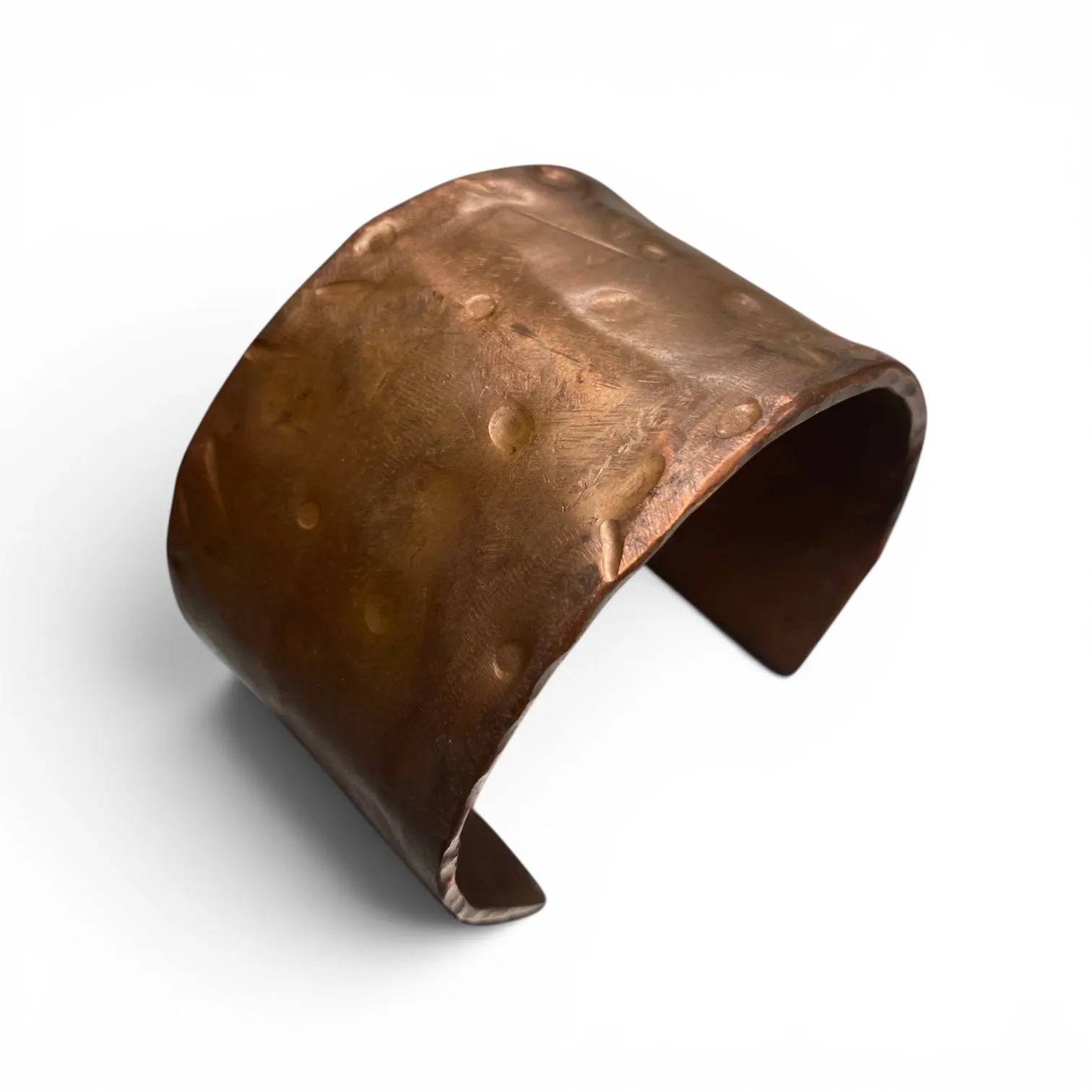
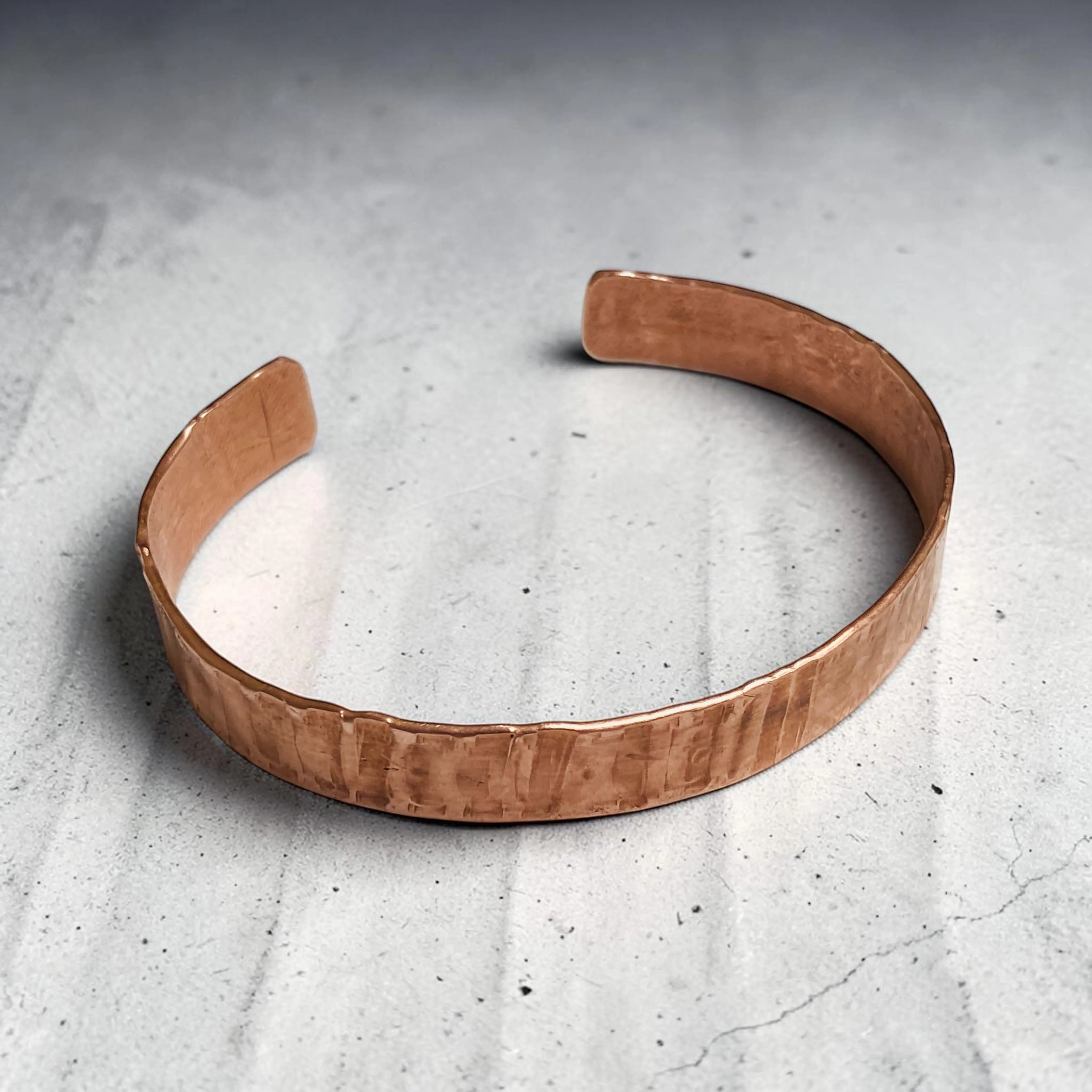
Cuffs and bracelets meet motion. They can rest against skin while you work, walk, garden, or exercise. On a warm day, a cuff may collect more moisture along the inside curve than you expect. A quick wipe after wearing it is usually enough. If the bracelet has deep hammer marks, fold a soft cloth over a fingertip and guide it gently through the texture. Pressing harder is not a better method. It just asks a handmade surface to give up the details that made you notice it in the first place.
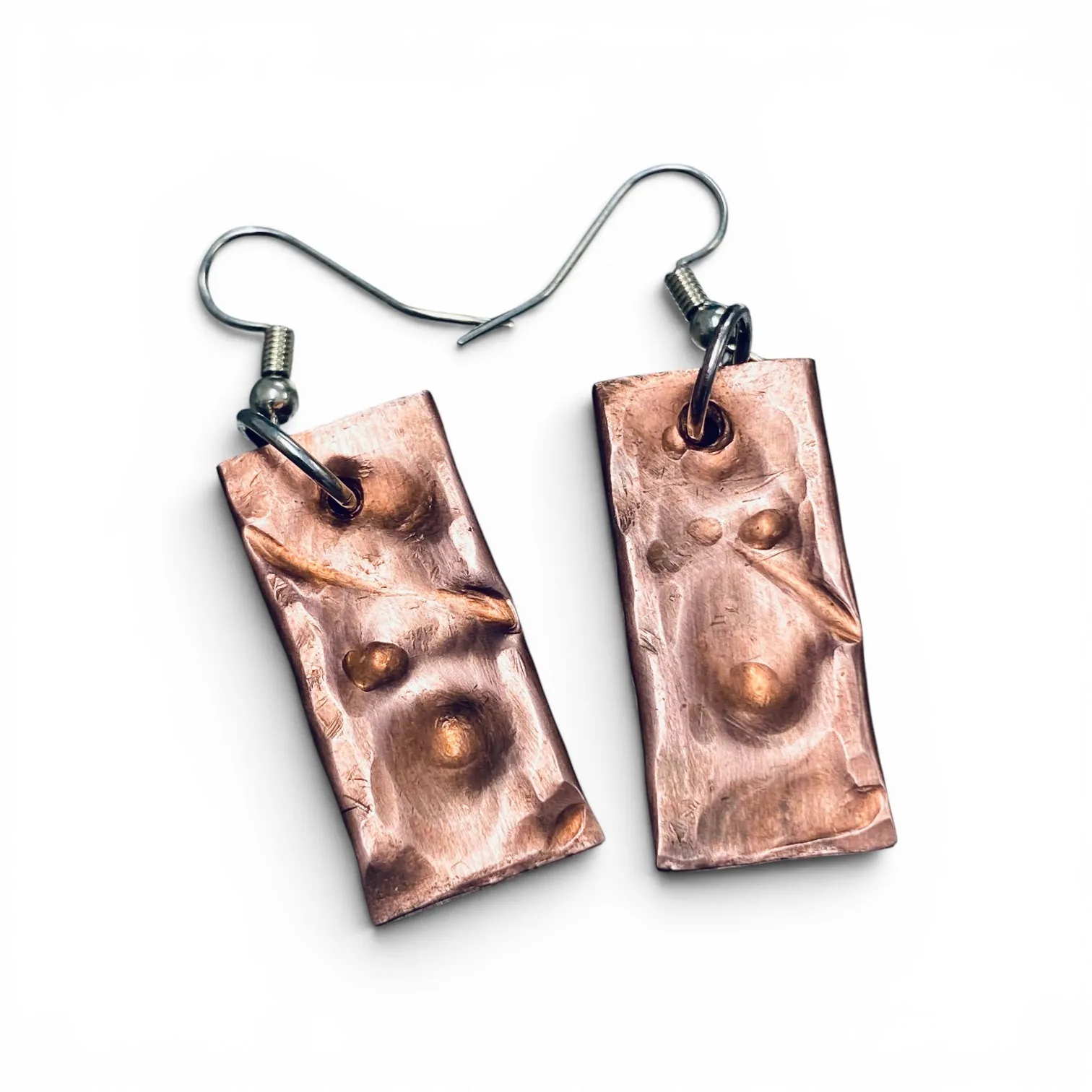
Earrings often have less broad contact with the skin, but they can include findings made from another metal. Keep that in mind before using any treatment beyond a dry cloth. A copper pendant may sit against skin, fabric, fragrance, or sunscreen depending on how it is worn. Let those products dry first, and give the pendant an occasional wipe. Each form benefits from the same basic habit: keep it dry when you can, clean it lightly when needed, and avoid turning normal change into a repair project.
What not to do
There is a small industry of fast fixes for jewelry marks, and most of them are not especially kind to raw copper. Do not use bleach, ammonia, rough polishing pads, unknown dips, or a scouring sponge. Avoid reaching for a strong coating as a reflex, too. A coating changes the surface you see and feel, can wear unevenly, and is not a substitute for paying attention to irritation or discomfort.
Kitchen remedies deserve the same restraint. Lemon, vinegar, salt, and baking soda are often presented as harmless because they are familiar. Yet acidity and grit are still active forces on a metal surface. A treatment that makes a bright copper pot look satisfying can be too much for a small, textured ring or a piece with another material at a join. If you choose to brighten bare copper, use the smallest amount of treatment that does the job, rinse, dry thoroughly, and stop. The goal is a piece that feels like yours, not an unnaturally uniform shine.
Do not assume a green mark tells you something private about your health or body chemistry. Bodies and materials are both variable, and a temporary surface mark is not a diagnosis. If the skin is uncomfortable or looks irritated, pause wearing the jewelry and get professional advice rather than trying to solve it with internet remedies. That is a calmer response than either ignoring a concern or overreacting to a little color transfer.
When the answer is to pause and pay attention
Color transfer is different from discomfort. If a piece causes itching, a rash, swelling, pain, or any other concerning skin change, take it off rather than trying to troubleshoot it with a cleaner. Copper sensitivity is reported infrequently in the medical literature, but it can occur. A review indexed by PubMed notes that copper can cause clinically relevant allergic reactions in selected cases. A health professional is the right person to advise on a skin reaction.
That distinction protects both the customer and the piece. A temporary color mark is a surface-care question. Ongoing irritation is a reason to stop wearing the jewelry and seek appropriate advice. Do not cover a reaction with a coating, a stronger polish, or an assumption about what your skin should tolerate.
Let raw copper tell its own story
Raw copper is not trying to be stainless steel, plated gold, or a perfectly fixed color. It catches fingerprints, softens in tone, darkens in small places, and reflects the routines around it. Those changes can be subtle or noticeable. They are part of choosing a material with an honest surface.
Yavaworks makes pieces with that warmth and visible handwork in view. You can see more about the material and process, or browse the current collection when you are looking for your next piece. If you are unsure about a particular item or the best way to care for it, contact Yavaworks before using a stronger treatment.
Frequently asked questions
Does copper jewelry always turn skin green?
No. Some customers notice a temporary green mark and others do not. It can vary with the piece, how closely it sits against the skin, moisture, and the products used around it.
Is a green mark the same as an allergic reaction?
No. A green surface mark and an irritated skin response are different things. If wearing a piece brings itching, a rash, swelling, or discomfort, take it off and speak with a qualified health professional.
How do I remove a green mark from skin?
Wash the area gently with soap and water, then dry it. Avoid harsh scrubbing. If the mark does not settle as expected or the skin feels irritated, stop wearing the piece and seek professional advice.
Can I stop raw copper jewelry from changing?
Not completely, and that changing surface is part of raw copper’s character. Keeping a piece dry, removing it for swimming and exercise, and wiping it after wear can help reduce residue without sealing away the metal’s natural warmth.