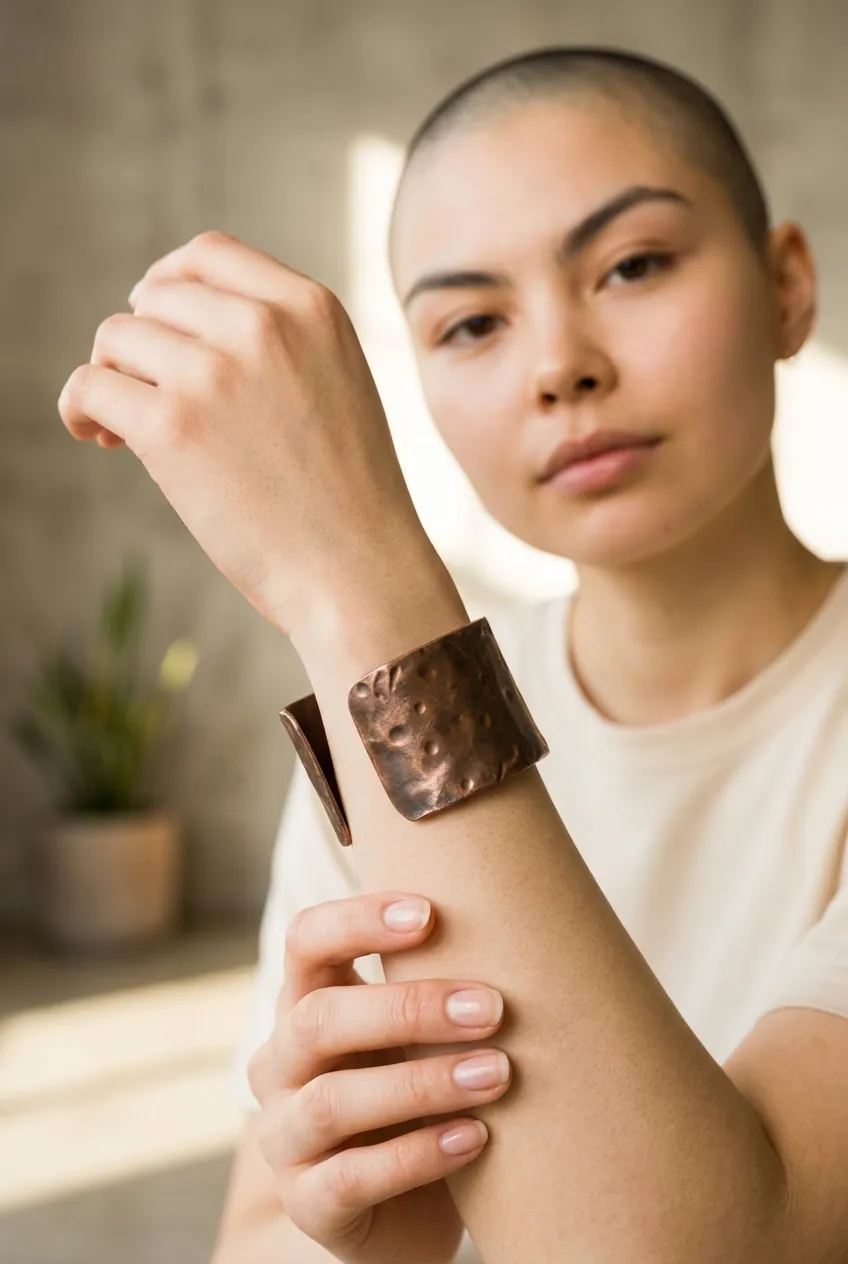
Copper does not stay still. Air, moisture, skin oils, and the rhythms of daily wear gradually shift its surface from bright pink-orange to brown, red, and deeper tones. That is part of the material's character. The Copper Development Association's overview of copper explains why the metal changes in contact with its environment. The question is not whether that change is good or bad. It is whether you want to keep it, soften it, or bring a little brightness back.
Polishing is different from ordinary cleaning. A dry cloth removes fingerprints and residue. Polishing goes further, taking away a little of the surface that has darkened. That can be beautiful on a plain cuff or ring, but it can also flatten the shadows inside hammer marks and remove a finish you had grown to love. The useful approach is quiet and deliberate: decide what you want to change, use the mildest method that can do it, then stop.
First, decide whether the piece needs polish
Look at the jewelry in natural light. If it is dusty, sticky from lotion, or marked with fingerprints, it may only need a soft dry wipe. If it has deepened into a warm brown that still suits you, it does not need fixing at all. Polish is for the moment when you genuinely prefer a lighter, brighter surface, not for every trace of age.
Before you begin, check what the piece is made of. Plain raw copper is the simplest case. Slow down if you see a stone, plated earring hook, darkened detail, coating, glue, or a delicate join. Those parts can react differently to moisture, acid, or rubbing. The Canadian Conservation Institute notes that polishing is inherently abrasive, which is a useful reason to do only as much as the piece calls for.
Start with a clean, dry surface
Put a soft, lint-free cloth on a flat table. Place the jewelry on it and wipe with gentle, even pressure. Turn the piece as you work. Follow the curve of a cuff, trace the outside and inside of a ring, and take a little more time around hammered texture or bends. This simple pass lifts everyday residue without adding water or altering the finish.
Avoid paper towels, rough cloths, scouring pads, and stiff brushes. They can leave their own scratch pattern, which looks very different from the quiet irregularity of handwork. If the piece looks and feels better after this first step, you are done. There is no prize for escalating a method that has already worked.
Use mild soap for ordinary buildup
When a dry cloth is not enough, add one tiny drop of mild dish soap to lukewarm water. Dampen a soft cloth and wring it almost dry. Wipe the copper gently, then use a second barely damp cloth to remove soap. Dry the piece right away with a fresh cloth and leave it in open air until you are sure no moisture remains in its texture or joins.
This is the right middle step for lotion, skin oil, dust, and the dull film that can collect on a frequently worn ring or cuff. It is also safer than a soak. Letting jewelry sit in water can create more work later, especially if it includes components that are not bare copper.
Brighten bare copper, slowly
If you want a brighter finish on a plain bare-copper piece, a brief spot treatment can help. Household advice often suggests lemon or white vinegar, sometimes with salt. The acid can lift tarnish, but that does not make it the right solution for every piece. Acid is a treatment, not a daily-care routine. Use it only after you have ruled out stones, coatings, plated components, and finishes you want to keep.
Spot-test an inconspicuous area first. Put a tiny amount of the chosen cleaner on a soft cloth, touch only the copper, and use a light hand. Rinse promptly with a damp cloth, then dry completely. Do not soak the piece, and do not rub salt directly into a textured surface. Salt crystals can scratch, especially when pressure turns a simple polish into abrasion.
Commercial copper polish can be useful for plain metal, but read its instructions and keep it away from any non-copper component. A product that works well on a large kitchen object can be unnecessarily aggressive for a small hand-finished ring. When the surface begins to look the way you want, stop. More shine is not automatically more beautiful.
Protect the details that make it handmade
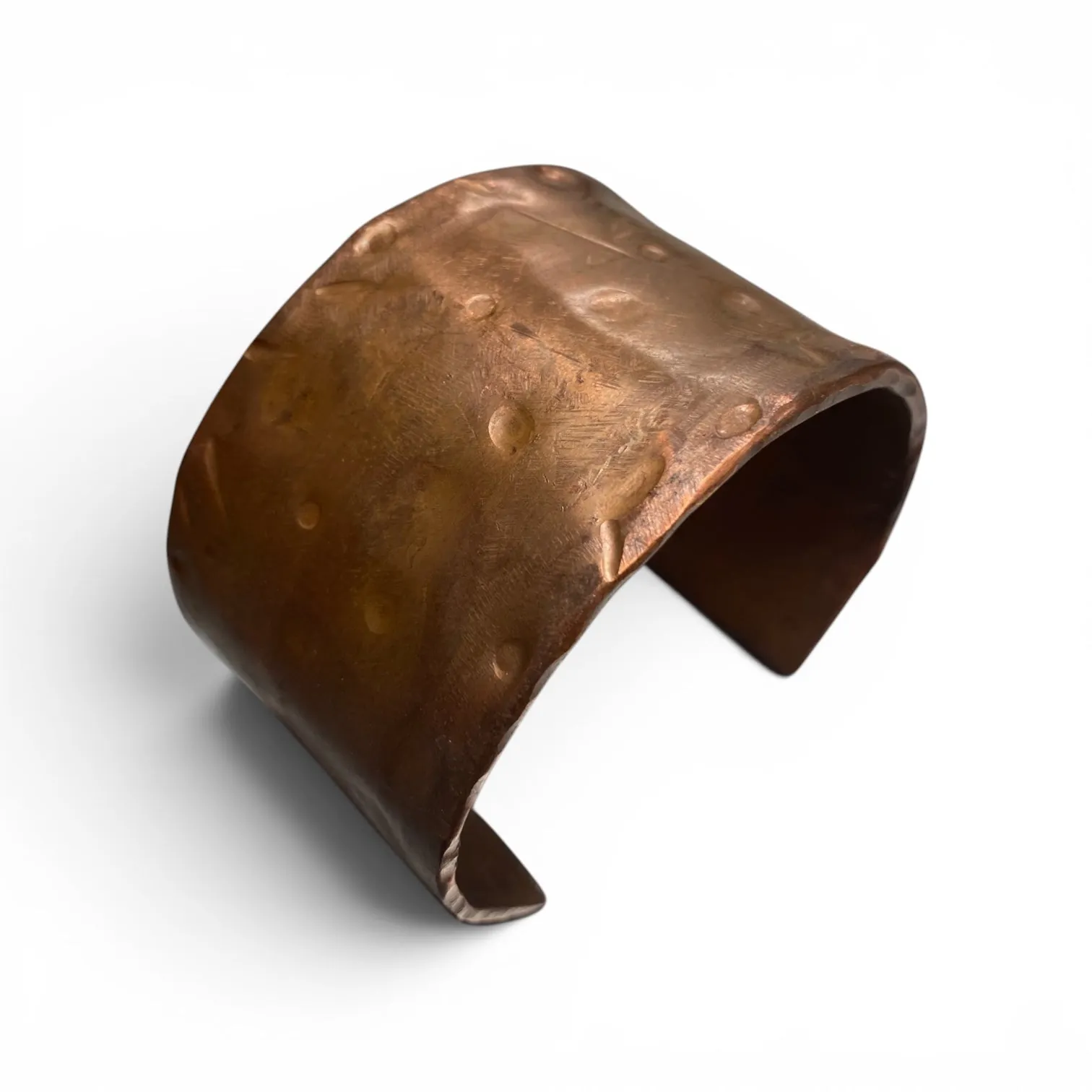
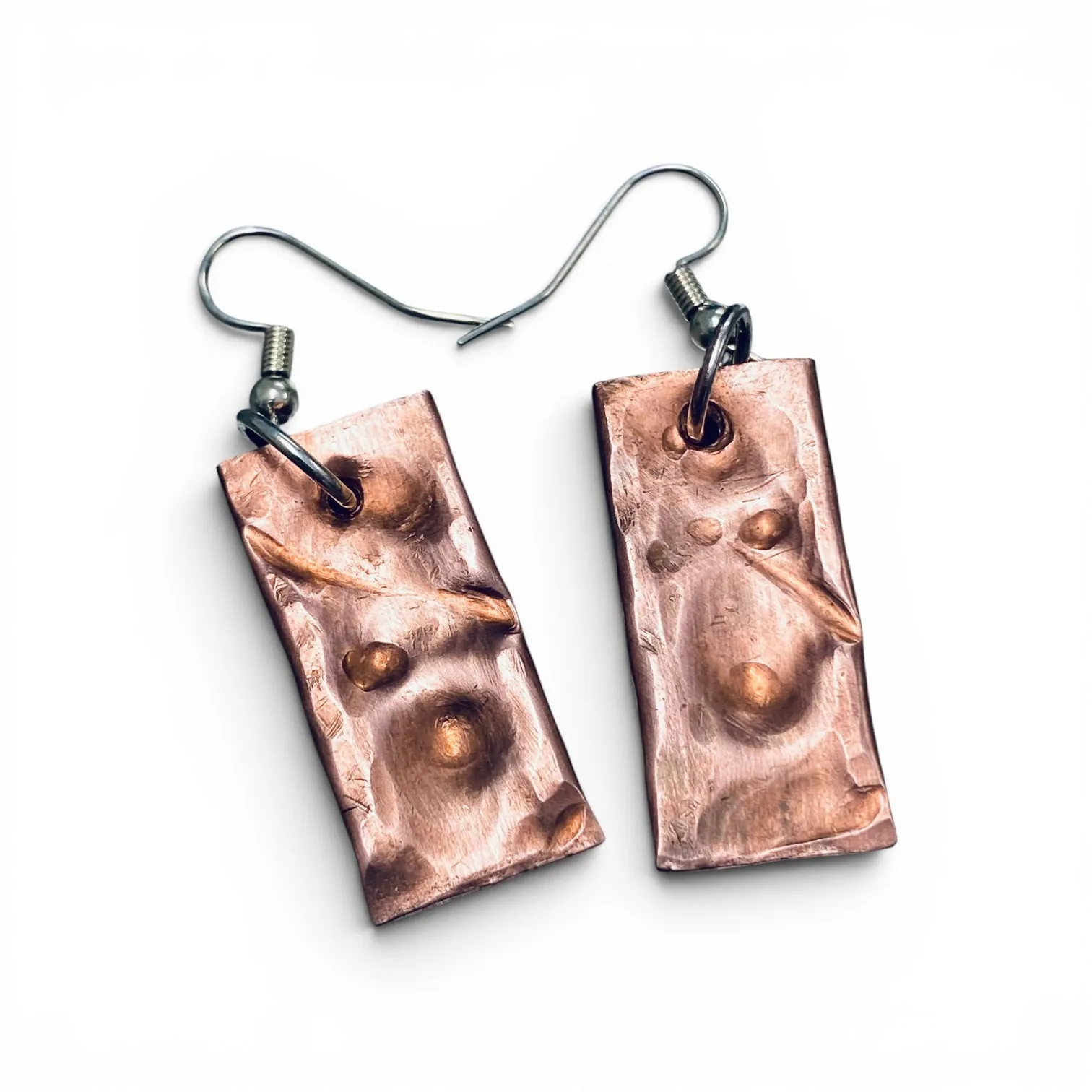
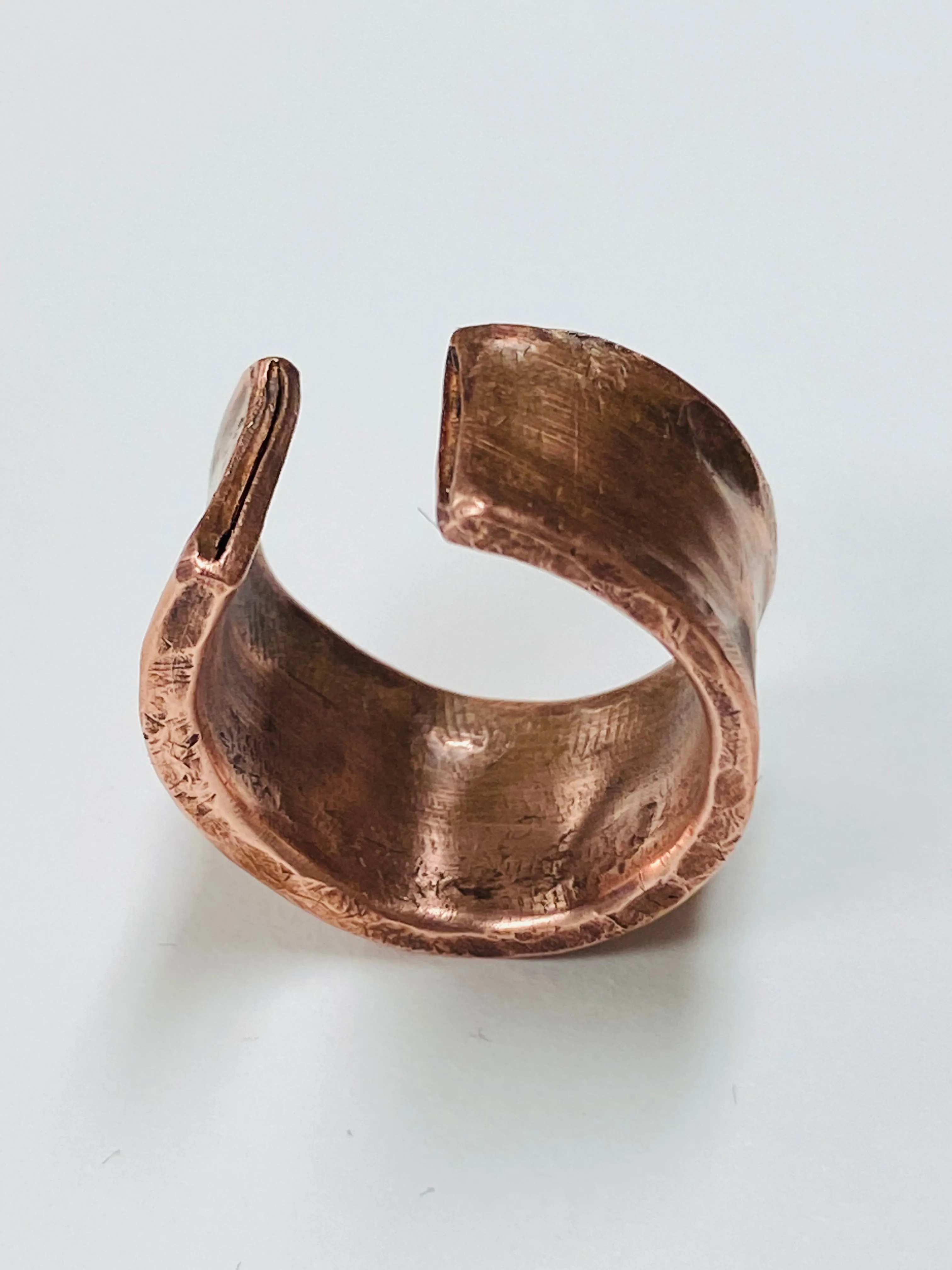
Texture changes the way a piece should be polished. On a smooth open cuff, the goal may be an even brightness. On a hammered cuff or a ring with darkened recesses, those shadows may be carrying half the visual interest. Pressing hard into every mark can make the metal look flat, even when it is technically clean.
Use the pad of one finger beneath the cloth to move through texture softly. Take a look between passes rather than polishing on autopilot. If a darker area reads as intentional depth, leave it. The beauty of raw copper is that it can hold both light and history at once.
Know when not to continue
Stop and ask for advice when a piece has a loose stone, a lifting sealant, a crack, a damaged clasp, or green material collecting around a join. Stronger cleaners do not repair those issues. They can make them worse or hide a problem until the next time you wear the piece.
Also pause when your skin is uncomfortable. Copper can leave a temporary green mark when it meets moisture, sweat, lotion, or fragrance. Wash the skin, dry the jewelry, and keep the piece away from water and products before wearing it again. If you notice irritation, stop wearing it and seek advice from a qualified health professional. Care should make jewelry more comfortable, never turn a comfort question into a polishing project.
Make brightness last by changing the routine
The easiest way to reduce frequent polishing is to give copper a quieter life between wears. Put jewelry on after lotion, fragrance, sunscreen, and makeup have settled. Take it off before swimming, showering, strenuous exercise, or cleaning. Wipe it dry after wear, then store each piece separately in a soft pouch or lined box away from bathroom humidity.
These habits do not freeze copper in place, and they should not. They simply keep residue and prolonged moisture from speeding up the messier kind of change. A piece can then develop its own surface slowly, rather than asking you for an aggressive reset every few weeks.
A five-minute polishing routine
Gather two soft cloths, a small bowl of lukewarm water, and mild soap. First, inspect the piece for stones, coatings, plated parts, and loose areas. Second, dry-wipe the jewelry. Third, use the barely damp soapy cloth only if there is residue left behind. Fourth, dry it completely. Finally, only if you still want a brighter look and the piece is plain bare copper, spot-test a very mild polish on a small area.
That sequence protects you from the most common mistake: reaching for a strong method before you know what you are trying to remove. It also makes the result easier to judge. You get to keep the warmth that belongs to the piece while taking away the residue that does not.
How Yavaworks helps
Yavaworks makes raw copper jewelry for customers who want visible handwork and a material that changes honestly with wear. Start with the site's copper care notes for everyday guidance, or read the more detailed cleaning guide when a piece needs attention. If you have a question about a particular piece or a method you are considering, contact Yavaworks before trying anything more aggressive. You can also browse the current collection for available pieces.
Frequently asked questions
Can I polish copper jewelry with lemon and salt?
Only use a tiny amount on plain, bare copper after a spot test. Lemon is acidic and salt can abrade a surface, so keep that method away from stones, coatings, plated parts, glued details, and finishes you want to preserve.
Will polishing remove copper patina?
It can. Polishing takes away a small amount of surface material, which can lighten or remove the darker tone that develops naturally. If you like the patina, start with a dry cloth and stop as soon as the piece feels clean.
How often should I polish copper jewelry?
There is no fixed schedule. Wipe the piece dry after wear and polish only when you genuinely want a brighter surface. Regular gentle care reduces the need for a stronger cleaning session.
What should I avoid when polishing copper jewelry?
Avoid scouring pads, abrasive powders, bleach, ammonia, harsh dips, and aggressive rubbing. If a piece has a loose stone, lifting coating, crack, or stubborn residue around a join, ask the maker before trying anything stronger.