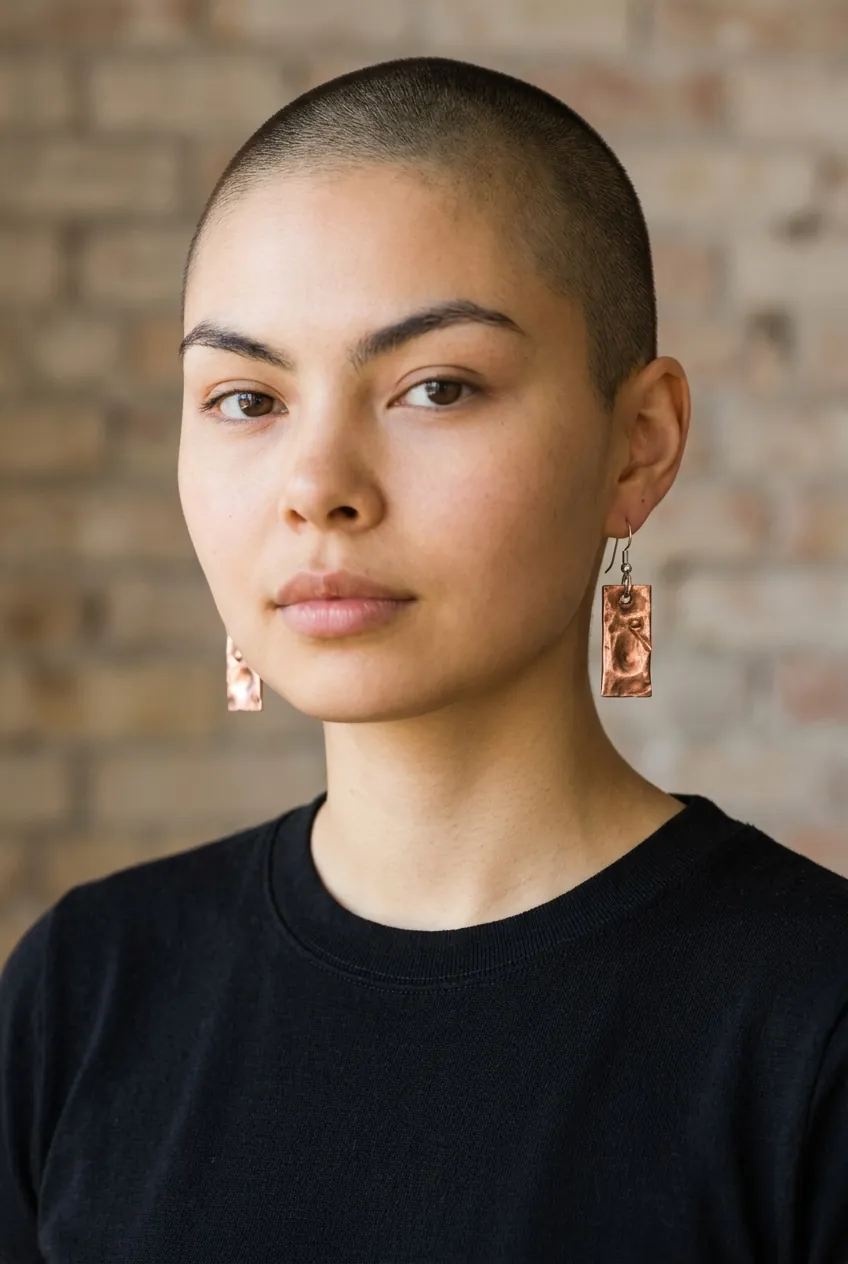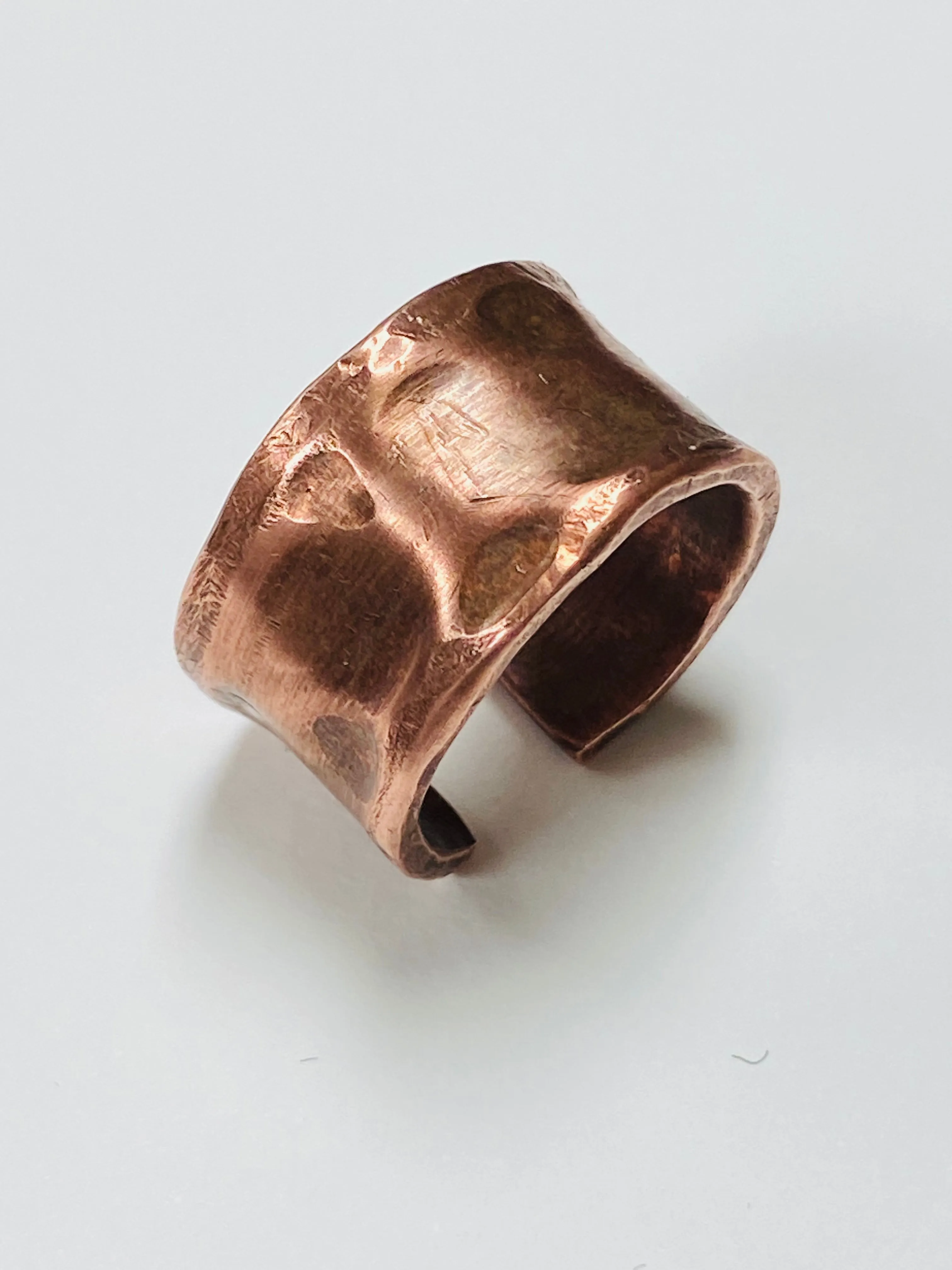
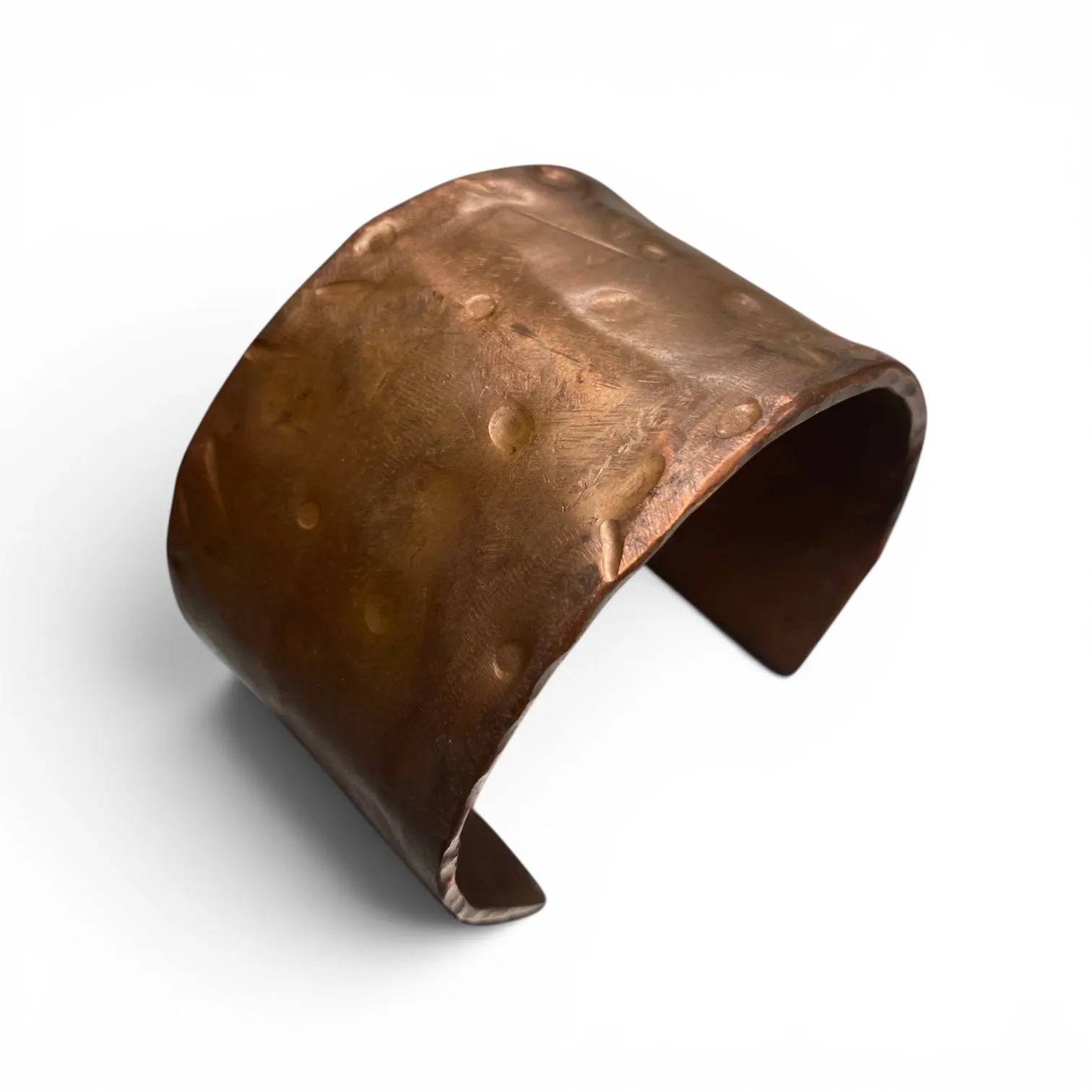
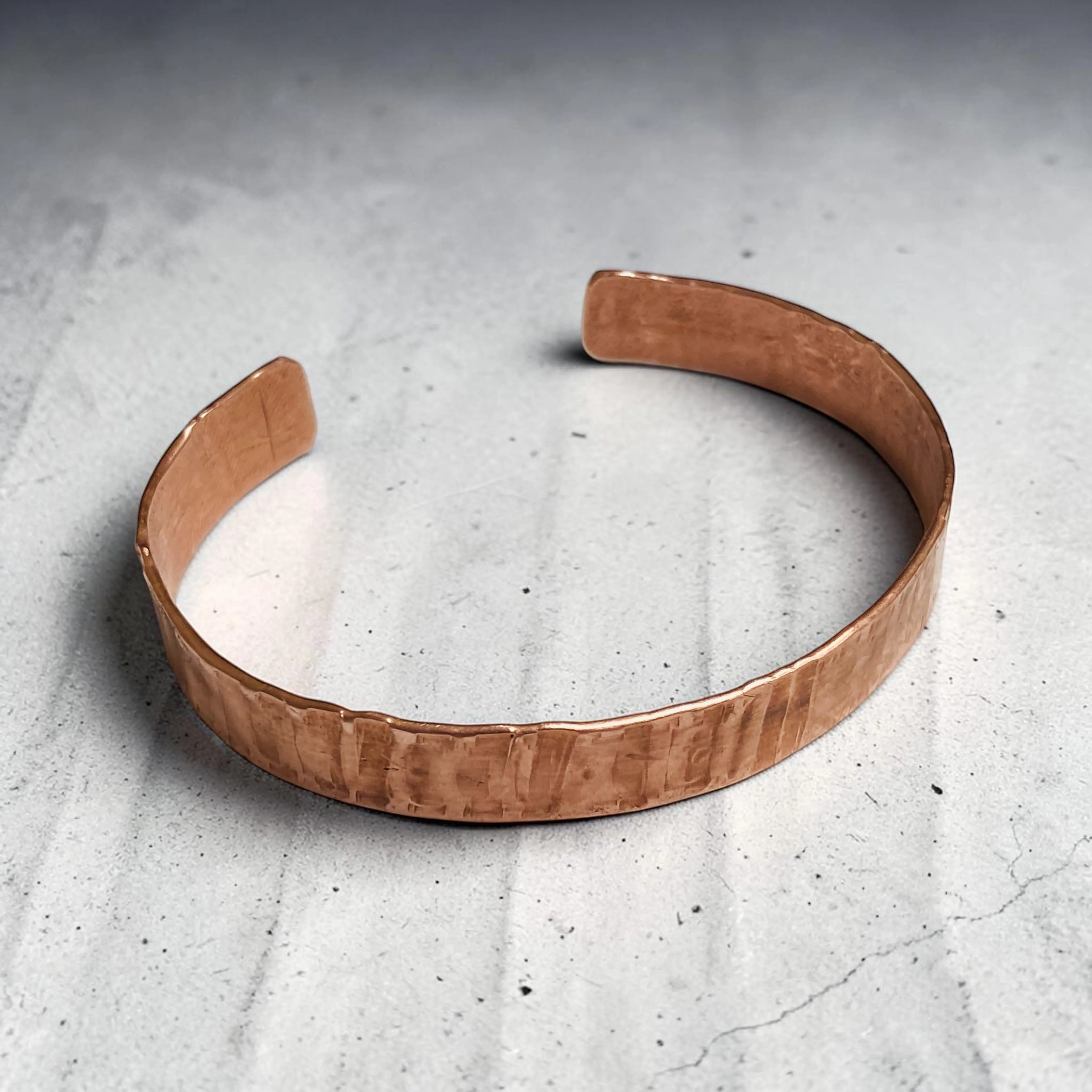
Copper jewelry is often described in the language of benefits. Some of that language is simple and true: raw copper is warm against the skin, visibly alive in changing light, and marked by the handwork that shaped it. A hammered cuff catches the light differently each time it moves. A ring softens from bright copper toward a deeper, lived-in tone. Those are good reasons to choose it.
Other claims are less grounded. Copper is an essential mineral, and that fact sometimes gets stretched into promises that wearing copper jewelry can treat pain, improve wellness, or deliver a nutrient through the skin. It is worth separating the material's honest appeal from the claims that ask too much of it. A piece can be meaningful, beautiful, and satisfying to wear without being a medical treatment.
The benefits you can actually feel
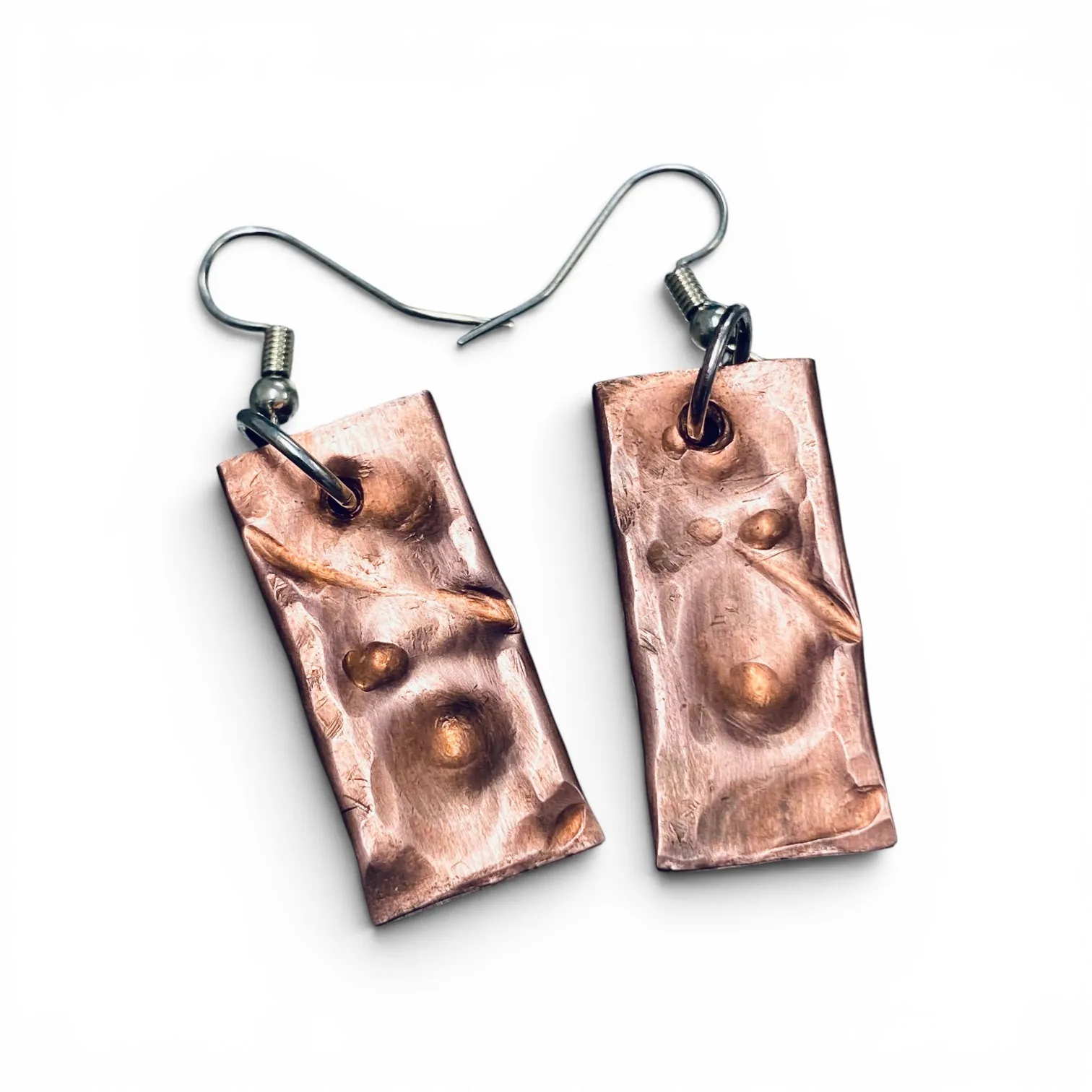
Raw copper is tactile. It has a soft visual warmth that shifts from rose-orange to deeper red-brown, and a handmade surface gives every hammer mark and bend a role in the finished piece. Unlike a highly plated surface designed to stay visually fixed, bare copper responds to air, moisture, and ordinary wear. That change is not a defect. It is part of choosing a material with a visible life.
There is also the benefit of attention. A copper ring or cuff asks for a small rhythm of care: wipe it dry after wearing, set it aside for swimming or heavy work, and let its surface settle naturally. For many customers, that makes the piece feel more personal over time. It becomes less like a generic accessory and more like something that has moved through real days with you.
The Copper Development Association's overview of the metal's properties is a useful starting point for understanding why copper has held people's attention for so long. Its warmth, workability, and changing surface are material qualities, not a wellness pitch. They are enough.
Copper is essential, but jewelry is not nutrition
Copper is an essential mineral the body needs for normal functions. The important detail is how the body gets it. The National Institutes of Health consumer guide to copper explains that people get copper from food and, when appropriate, supplements. It lists foods such as shellfish, nuts, seeds, whole grains, potatoes, mushrooms, chickpeas, and tofu. It does not describe jewelry as a source of dietary copper.
That distinction keeps a beautiful object from being asked to do a job it cannot prove it does. Wearing a copper cuff is not a replacement for food, medical care, or advice from a qualified health professional. If someone is concerned about nutrition or a health condition, the useful next step is a conversation with a clinician, not a stronger claim on a product page.
What about pain, arthritis, or inflammation?
Claims around copper bracelets and pain are common, especially for arthritis. The evidence does not support treating a bracelet as therapy. In a randomized, placebo-controlled study indexed by PubMed, copper bracelets did not produce a meaningful difference in pain, stiffness, or physical function for people with osteoarthritis compared with control devices.
That does not mean the ritual of wearing a favorite piece has no personal value. Jewelry can make someone feel connected, steady, or more like themselves. Those are personal experiences, and they do not need to be dressed up as clinical outcomes. Enjoy the feeling of wearing the piece, but do not rely on it for treatment or delay professional care because of a wellness claim.
Comfort is more useful than a miracle claim
The practical question is often not “what can copper cure?” but “how does this piece feel on me?” Start with form and fit. A cuff should sit comfortably without pinching. A ring should not trap water under the band. The best piece is one that feels easy to reach for, not one that comes with a grand promise.
Raw copper can leave a temporary green mark on some customers' skin, especially when moisture, sweat, lotion, or close contact are involved. That is a surface-care issue, not evidence of detoxification or proof that the jewelry is doing something to the body. Our guide to copper and green skin explains what is happening and how to keep the routine gentle.
If a piece causes itching, a rash, swelling, pain, or persistent discomfort, take it off. Most jewelry contact allergies involve metals such as nickel or cobalt, according to DermNet's jewelry-allergy guidance, but any concerning skin reaction deserves a thoughtful response. A qualified health professional can help identify what is going on.
Choose copper for the right reasons
Choose raw copper when you want jewelry that looks like a material, not a finish. It can be bright, deep, polished, darkened at the edges, or marked by the rhythm of a hammer. It can feel substantial without being formal. It works especially well for customers who appreciate objects that collect a little evidence of being used.
Then choose a care routine that keeps the character in view. Wipe the piece with a soft dry cloth after wearing. Remove it for swimming, showering, strenuous exercise, and chemical-heavy chores. Store it dry and separate from harder jewelry. The full everyday copper jewelry care guide explains this quiet routine in more detail.
A benefit does not need to be a promise
There is a temptation to make every material carry a transformation story. Raw copper does not need one. Its benefit can be as tangible as the way it warms against the wrist, shifts with the light, and holds the evidence of visible handwork. It can be the piece that makes an ordinary outfit feel considered, or the gift that carries a little more character than something perfectly uniform.
Yavaworks makes handmade raw copper jewelry for customers who want that honest material presence close at hand. Browse the current collection, explore the copper cuff guide, or contact Yavaworks when you want to ask about a particular piece. The right copper jewelry should earn its place because you enjoy wearing it, not because it asks you to believe more than it can show.
Frequently asked questions
Does wearing copper jewelry add copper to my diet?
Copper is an essential nutrient, but the National Institutes of Health describes dietary copper as the source the body absorbs. Jewelry should be chosen for how it looks and feels, not as a way to meet nutritional needs.
Can copper jewelry help with arthritis or pain?
Copper jewelry should not be treated as a remedy. A randomized clinical trial of copper bracelets for osteoarthritis found no meaningful difference in pain, stiffness, or function compared with control devices.
Is copper jewelry safe for sensitive skin?
Many customers wear copper comfortably, but any jewelry can be a poor fit for an individual. Stop wearing a piece if you notice itching, a rash, swelling, pain, or persistent discomfort, and seek advice from a qualified health professional.
What is the best reason to choose raw copper jewelry?
Choose it for the qualities you can actually experience: warmth, color, visible handwork, and a surface that deepens over time. Those are real benefits without asking the jewelry to make a medical promise.