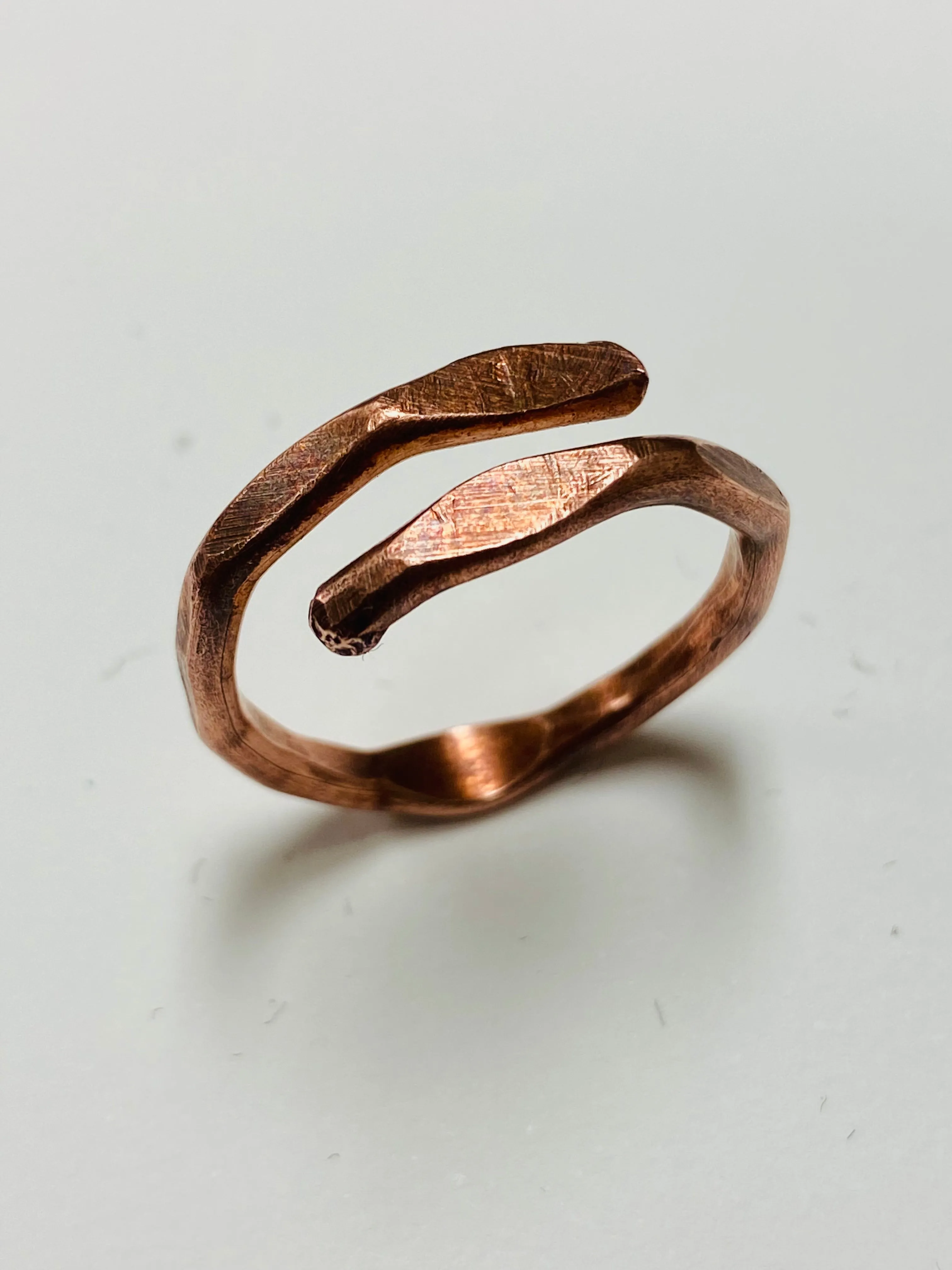
Copper does not stay one color, and that is part of why it is worth wearing. The metal begins bright and warm, then meets air, moisture, skin oils, and the ordinary residue of a day. Its surface may deepen to red-brown, soften to a muted glow, or develop darker marks in the low places of a hammered form. None of that means the piece has failed. The useful question is simpler: which changes feel like character, and which ones would you rather slow down?
There is no permanent way to stop bare copper from reacting. There is a much better way to live with it. Keep the piece dry, remove residue after wear, store it with care, and avoid treating every dark area as something to scrub away. That approach protects both the metal and the hand-finished surface that makes raw copper different from factory-perfect jewelry.
Start by choosing the finish you want to keep
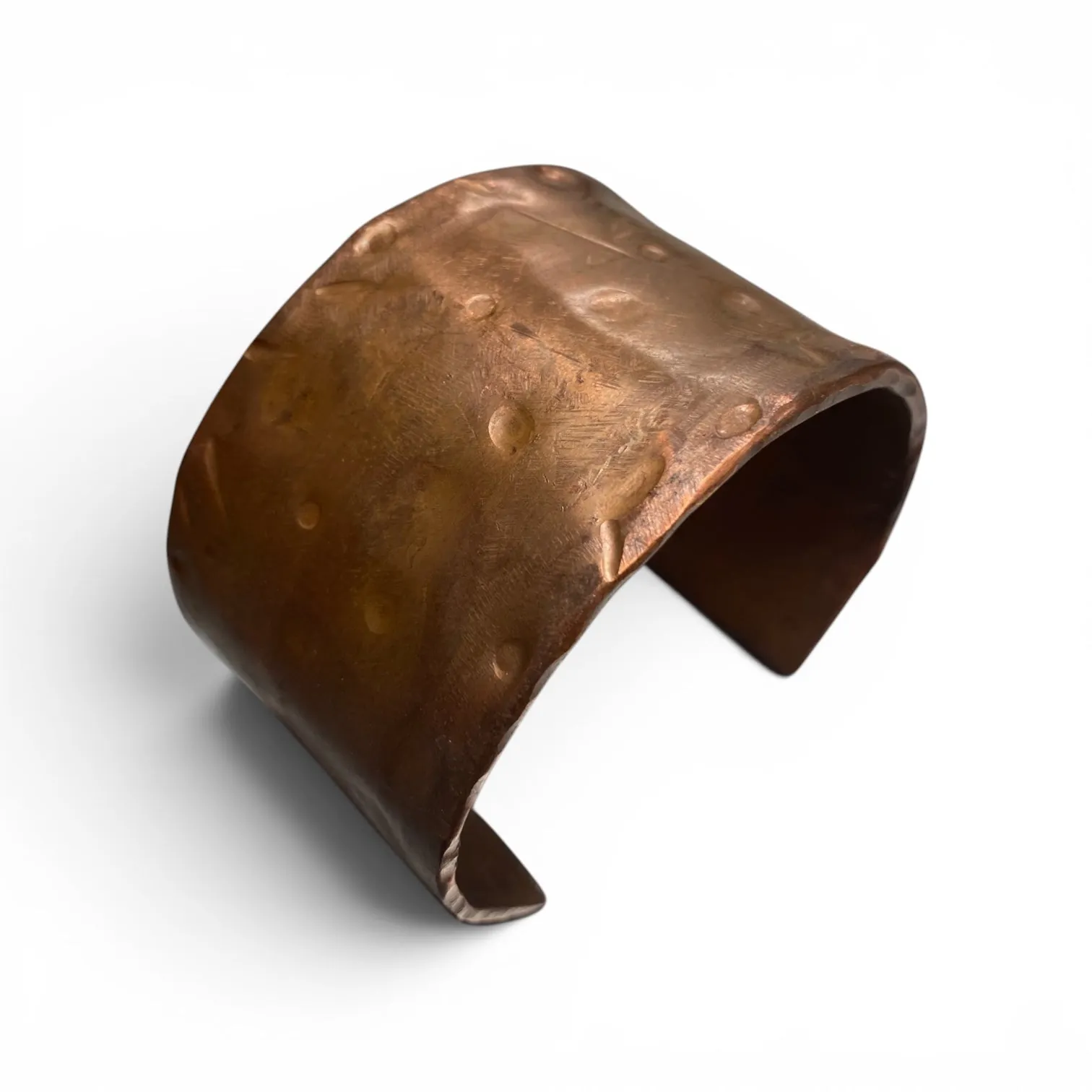
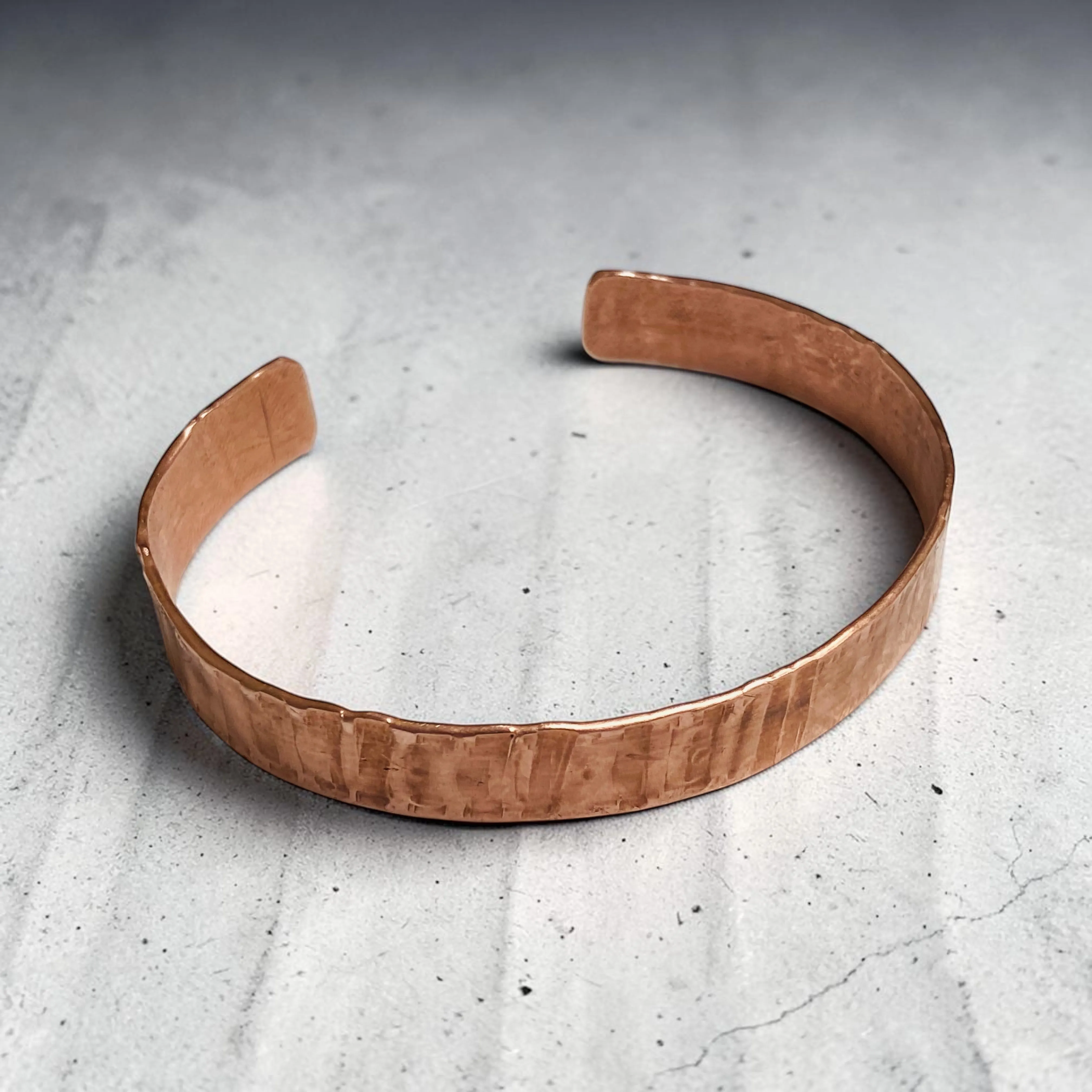
Before building a care routine, look at the piece in natural light. A smooth bright cuff, a deeply hammered bracelet, and a ring with warm dark recesses do not need the same treatment. Patina can make texture more legible. A little darkening can make a folded edge or hammer mark feel more dimensional. If you enjoy that effect, the goal is not brightness at all. It is a clean, dry surface that can keep changing slowly.
On the other hand, fingerprints, sticky lotion film, uneven green residue, and dull patches from a humid drawer are not necessarily the story you want the metal to tell. Separate those from the finish itself. The Copper Development Association's overview of copper explains that copper naturally develops surface films as it meets its environment. That is why a good routine begins with observation, not with the strongest cleaner in the cupboard.
Pause before doing anything more than a soft wipe if you see stones, enamel, glued details, plating, an intentional darkened finish, or a coating you cannot identify. A plain bare-copper ring gives you more room to experiment than a mixed-material piece. If you are unsure, asking the maker is gentler than discovering the answer after a surface has changed.
Keep water, products, and sweat from settling in
Copper changes fastest when moisture and residue get time to sit on it. The most effective habits are also the least dramatic. Put jewelry on after lotion, sunscreen, fragrance, hair product, and makeup have had a chance to dry. Take it off before showering, swimming, exercise, dishwashing, cleaning, or gardening. A ring that stays on through repeated handwashing is simply having a much harder day than a pendant worn for dinner.
This is not a rule about keeping a piece precious or untouched. It is a way to keep care small. Sweat carries salts. Soap, chlorine, and household cleaners can leave a film. Fragrance and body products can build up around a clasp or the inside of a ring band. The more often those things stay on the metal, the more often you will feel pushed toward polishing. The jewelry-care guidance from Blue Nile makes the same practical distinction: cleaning removes residue, while polishing changes the surface to restore shine.
Think in pairs: put copper on last, and take it off first. That one habit keeps the piece out of the splash zone when you are getting ready and makes it easier to remember before a shower or a sink full of dishes. When you do wear a piece through a warm or active day, do not worry. Just wipe it before putting it away.
Use a thirty-second after-wear routine
The best time to care for copper is just after you take it off. Lay it on a soft cloth and give it a gentle, dry wipe. Follow the curve of a cuff, the inside and outside of a ring, and the backs of earrings where skin products can collect. You are not trying to brighten the metal. You are lifting moisture, oil, and dust before they have a chance to settle into texture.
Choose a lint-free jewelry cloth or soft cotton cloth. Skip paper towels, rough fabric, stiff brushes, and scouring pads. Their scratch pattern is very different from the quiet irregularity of handwork, and no amount of later polishing fully puts that surface back. If the piece feels dry and looks good after this first pass, the routine is finished.
When a dry cloth is not enough, use a barely damp cloth with a trace of mild soap, then follow with a second cloth dampened only with water. Dry the piece immediately and let it sit in open air until you are certain that moisture is gone from every curve and join. Do not seal a damp piece into a pouch or box. That turns careful cleaning into an enclosed, humid little weather system.

Store each piece like it has its own climate
Storage is where the routine earns its keep. Copper does best when it is clean, dry, separate from harder pieces, and protected from big swings in humidity. A lined jewelry box with individual compartments works. So does a soft pouch. For a piece you are storing for a while, a sealed bag or small lidded container can help limit exposure, provided the jewelry is completely dry first.
Avoid leaving copper loose on a bathroom counter, in a tray near an open window, or mixed into a busy pile of jewelry. Bathrooms are humid by design. Mixed piles invite scratches, tangles, and old product residue to travel from one piece to another. One piece per pouch or compartment is not fussy, it is simply easier on the surface.
Travel calls for the same thinking in a smaller form. Put a ring, cuff, or pair of earrings in its own soft pouch before it goes into a makeup bag, suitcase, or coat pocket. Do not let it ride loose beside keys, coins, or a damp swimsuit. When you arrive, take the piece out, give it a quick dry wipe, and return it to a dry compartment. Copper does not need elaborate equipment, it just benefits from not being treated like spare change.
If your home is notably humid, place a fresh moisture-absorbing packet nearby in the storage box, not pressed against the jewelry. Check stored pieces every so often rather than assuming a closed container has solved everything. The point is not to create museum storage. It is to notice a changing surface early enough that a soft wipe is still all it needs.
There is a useful difference between a soft pouch and a sealed bag. A pouch cushions a piece and protects it from friction. A sealed bag limits outside air and moisture. Depending on the piece and how long it will rest, using a pouch inside a dry lidded box can give you both benefits without turning storage into a project.
Do less polishing, more often
Polishing is not ordinary care. It is a choice to remove a little of the surface so the metal looks brighter. On plain copper, that may be exactly what you want. On a hand-hammered bracelet or an intentionally darkened detail, repeated polishing can erase contrast and soften the marks that gave the piece its depth in the first place.
Try this order before reaching for a polish: dry wipe, gentle soap-and-water wipe if needed, full dry, then reassess in natural light. If the piece still looks darker than you want and it is plain bare copper, use the mildest appropriate method and stop as soon as the surface feels right. The Canadian Conservation Institute notes that polishing is inherently abrasive, a good reason to use it with a light hand and only when there is a clear reason.
Acidic kitchen methods may brighten plain copper quickly, but they do not belong on every piece. Keep them away from stones, coatings, plating, glue, enamel, and unknown finishes. They can also take away a patina you meant to keep. For a deeper walkthrough of a careful brightening process, use Yavaworks' guide to polishing copper jewelry. If the issue is ordinary buildup rather than a finish you want to change, the cleaning guide is the better first stop.
Be cautious with coatings
A clear coating can be useful, but it is not a universal answer. A coating changes the relationship between your skin, the air, and the copper. It can also change the feel, color, sheen, and future care of a piece. On a ring or cuff, the areas that meet skin and friction tend to wear first, so an uneven coating may become a new maintenance task rather than an escape from one.
If your piece arrived with a protective finish, preserve it with the maker's care advice. If you are thinking of adding one yourself, check with the maker first, especially when the surface is textured or intentionally patinated. Any finish should be compatible with the specific materials in the piece. Test it away from a visible surface when possible, and understand that coatings age too.
Do not use a clear coat to cover an unresolved problem. Green crust in a join, a lifting layer, a loose stone, a crack, or persistent skin discomfort deserves a pause, not another treatment. Cleaners and coatings can hide the clue while making future repair harder. A maker or qualified jeweler can tell you whether a surface needs care, repair, or simply to be left alone. That restraint is especially important on a one-of-a-kind hand-finished piece.
For many raw pieces, the best protection is still the least permanent: dry it after wear, store it properly, and polish only when you want a brighter finish. That keeps you in charge of the material without wrapping it in a treatment it was never meant to wear.
A realistic weekly and seasonal rhythm
Care works best when it fits into ordinary life. After each wear, dry-wipe the piece and return it to its own storage place. Once a week, or whenever you reach for the piece again, look for lotion film, trapped moisture, a scratch, or a surface change you did not expect. That is enough to catch most small issues while they are still easy.
Every few months, give frequently worn pieces a closer look in daylight. Decide whether you still enjoy their surface. A raw copper cuff may be developing exactly the warmth you hoped for. A ring that gets washed with your hands may need a gentle clean. The goal is not a rigid calendar. It is a regular moment to choose the character you want to keep, rather than reacting only when a piece has become difficult to restore.
How Yavaworks helps
Yavaworks makes raw copper jewelry for customers who value visible handwork and a material that changes honestly with wear. The copper care notes collect the essentials in one place, while the Journal goes deeper on practical questions like why copper can leave a green mark and what to expect from the material. If you are unsure about a particular Yavaworks piece, contact Yavaworks before trying a stronger cleaner or coating. When you are ready for another piece to live with, you can also browse the current collection.
Frequently asked questions
Can copper jewelry be kept completely tarnish-free?
No. Bare copper naturally reacts with its surroundings, so the realistic goal is to slow the change, not to freeze it forever. Keeping a piece dry, clean, and thoughtfully stored gives you much more control over how quickly its surface shifts.
What is the best way to store copper jewelry?
Store each clean, fully dry piece separately in a soft pouch, lined compartment, or sealed bag, then keep it in a dry drawer or box. Avoid bathrooms, open windowsills, and any place where humidity changes often.
Should I coat raw copper jewelry to stop tarnish?
A coating can be useful for a specific piece, especially when a maker designed it with one, but it is not the first answer for every item. Coatings can change color and feel, wear unevenly on rings and cuffs, and make later refinishing harder. Ask the maker before coating a hand-finished piece.
Why does one copper piece tarnish faster than another?
Wear, moisture, sweat, lotions, fragrance, storage conditions, and the shape of the piece all matter. A ring worn while washing hands will meet a very different day from earrings stored dry after a few hours of wear.