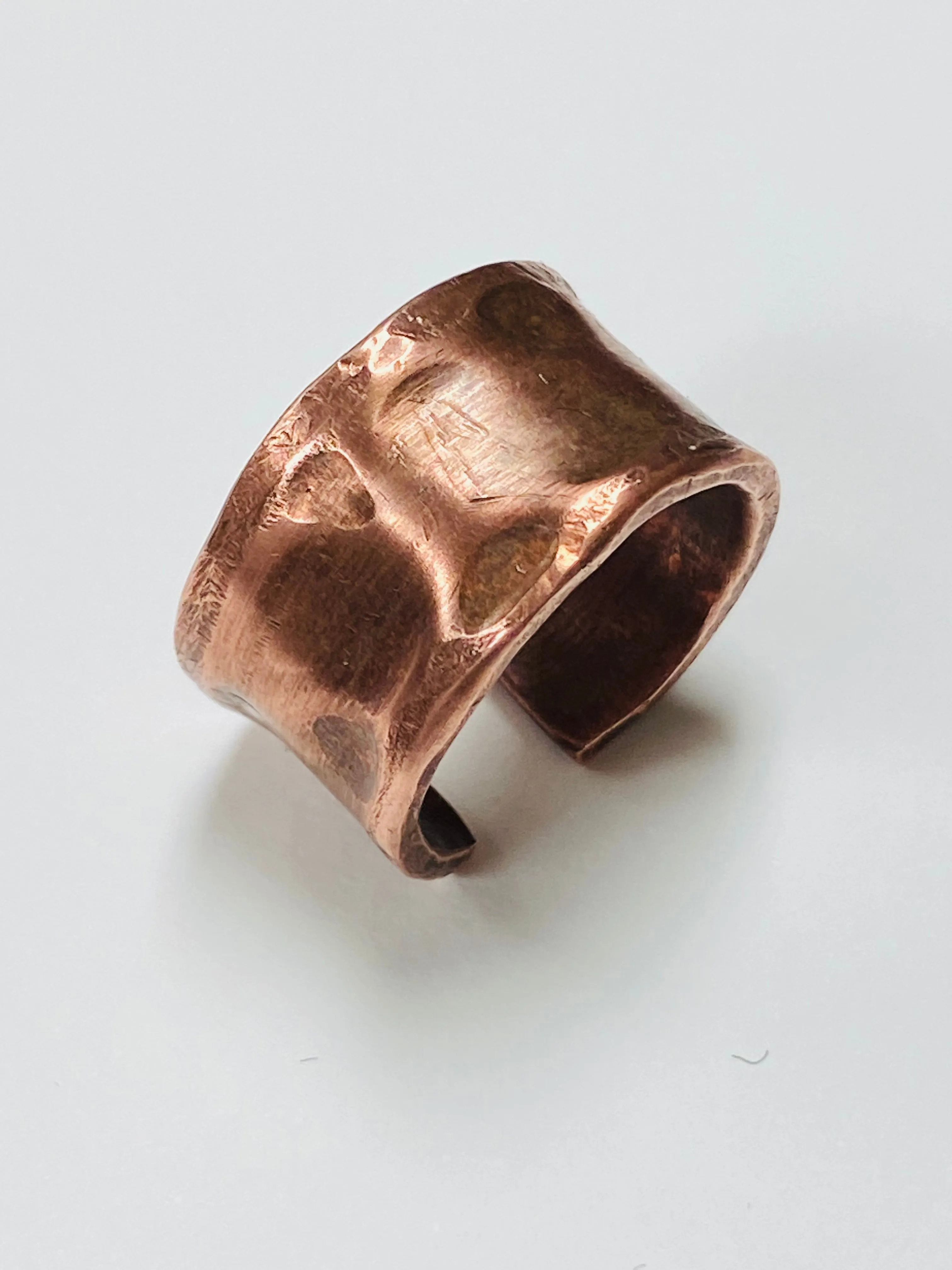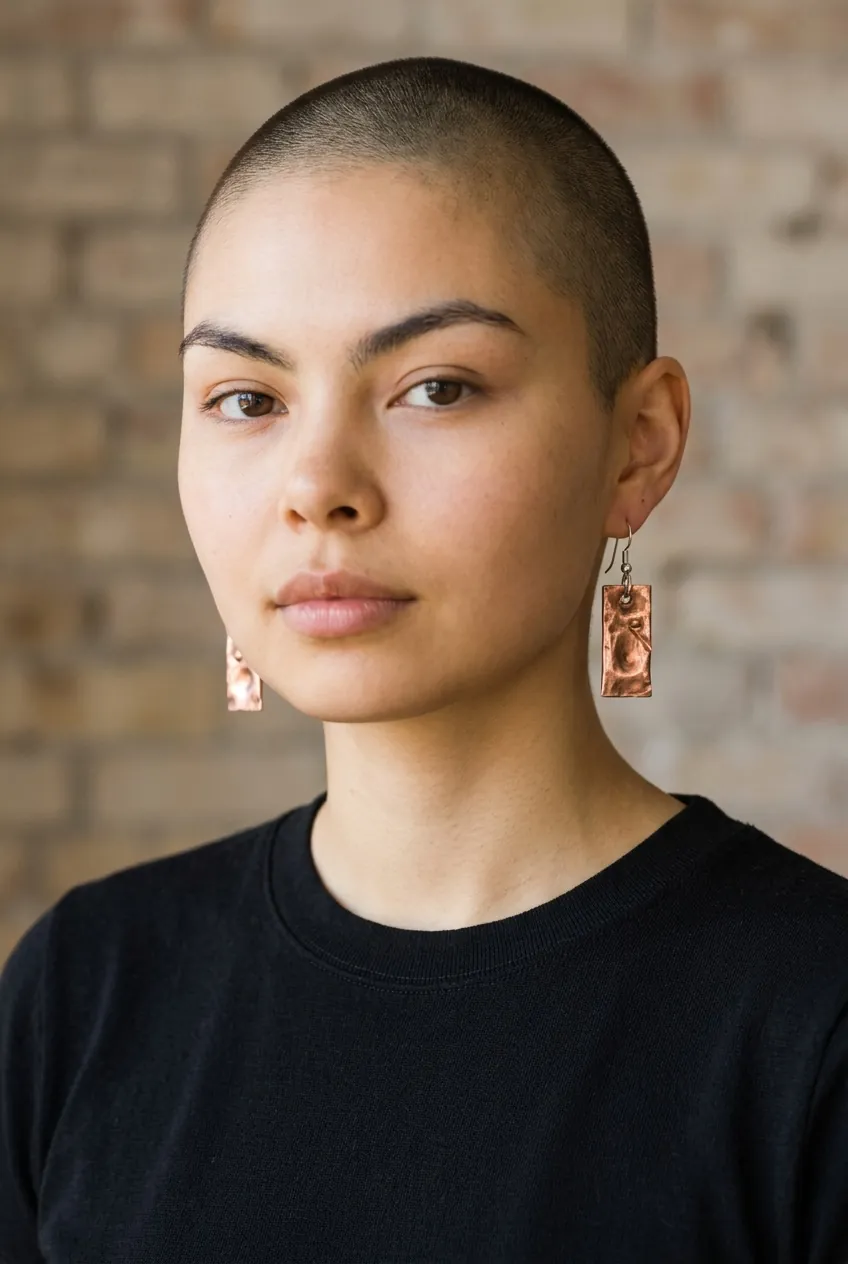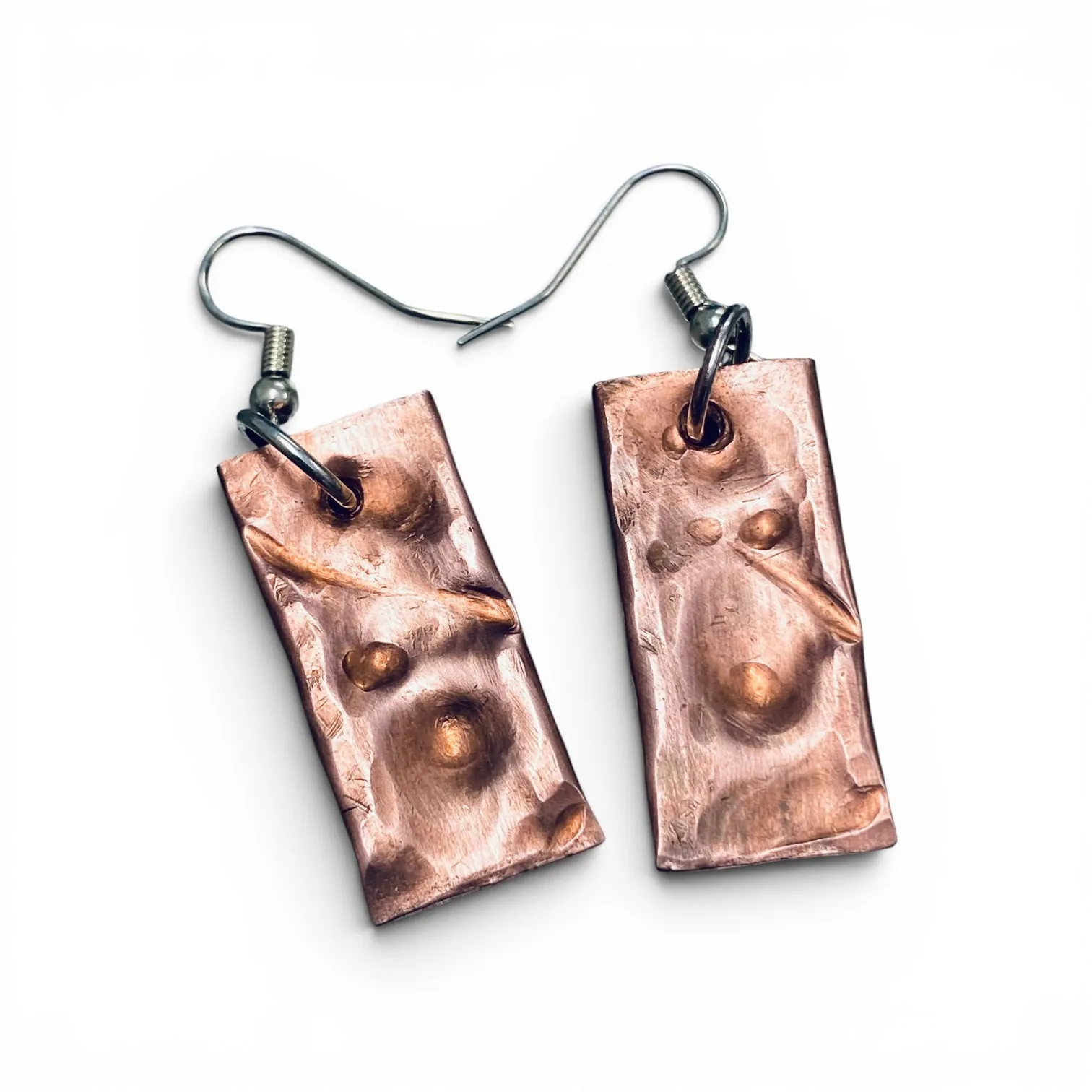
When a piece has the warm red-brown glow people associate with copper, it is reasonable to ask what you are actually seeing. Some jewelry is made from copper itself. Some is copper-plated over another metal. Some contains copper as part of an alloy, and some simply has a copper-colored finish. Those are different materials and different experiences to wear, but they can look remarkably similar in a product photograph.
The most useful approach is not a single dramatic test. It is a small set of clues: clear material language, the color beneath any wear, the feel of the piece, and a realistic understanding of what a magnet or a green mark can and cannot tell you. That gives you a better answer without scratching, soaking, or damaging the jewelry you are trying to understand.
Start with the seller’s material description
The clearest evidence should be available before the piece arrives. Look for plain descriptions such as “solid copper,” “raw copper,” or a stated copper content. If a listing says “copper-plated,” “copper tone,” “copper color,” or “copper finish,” it is describing appearance or construction, not necessarily a piece made all the way through from copper.
That wording is not automatically a warning. Plated jewelry can be a good choice when the seller names it honestly and the price reflects what it is. The problem is vagueness. A product page that talks only about a warm color, avoids naming the base metal, or switches between “copper” and “copper-colored” is asking you to fill in important information yourself. A maker who knows the material should be able to say what the body of the piece is made from and whether findings, clasps, or ear wires use another metal.
For a new purchase, begin by reading the full product description, not just the title. Then ask one direct question if the answer is missing: “Is this solid copper, copper-plated, or an alloy?” That is more reliable than trying to decode a photograph under studio lighting. The real copper jewelry guide gives a useful starting point for the difference between a raw material and a copper-colored surface.
Look for a warm copper color, but do not stop there
Fresh copper often reads as warm pink-orange, rose, or reddish brown. With air and wear, it can settle into deeper brown, red, and dark tones. Brass tends to look more yellow or gold because it contains copper and zinc, while bronze can look browner or more muted. Those are useful visual patterns, not a laboratory test. Lighting, camera editing, polish, coating, and age can make the same material appear quite different.
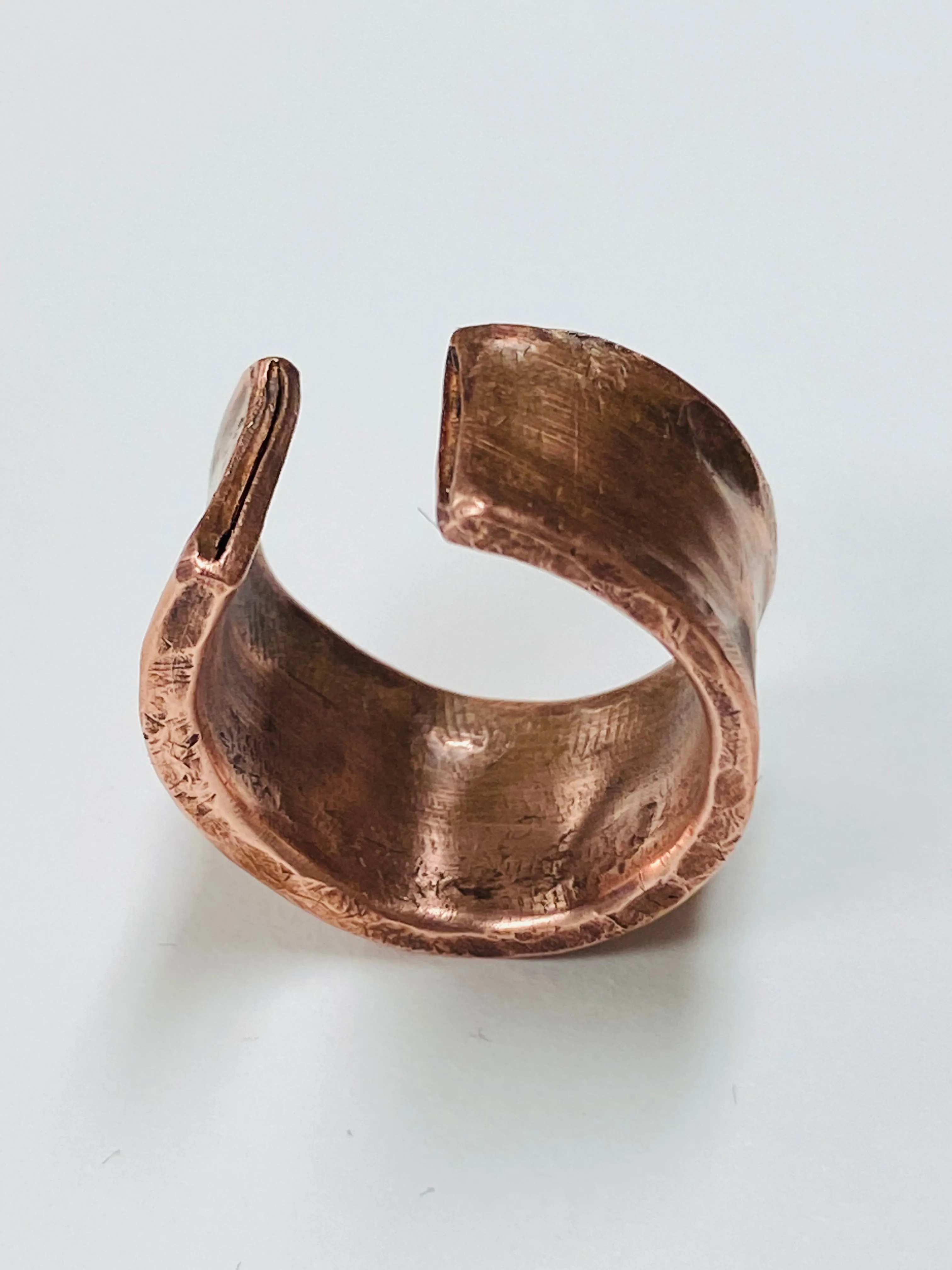
A good inspection happens in ordinary daylight. Look at the inside of a ring, the back of a pendant, the underside of a cuff, and any small edge that does not get photographed often. A piece that reads consistently warm across those areas is more promising than one with a bright surface and an unrelated gray or silver color underneath. If the jewelry has been intentionally darkened, that can make visual judgment harder, so let the description and construction carry more weight.
Natural surface change is normal for copper. The Copper Development Association’s material overview explains that copper changes as it meets its environment. Darkening alone does not mean a piece is low quality, and it does not prove purity either. The useful distinction is between an even, lived-in surface and a coating that is peeling, flaking, or exposing a completely different metal at a high-contact edge.
Check the edges, bends, and high-wear spots
Plating is a layer on top of another material. Over time, the places that rub most often can offer the clearest clues. Look closely at the inside edge of a ring, the corners of a cuff, a clasp connection, a jump ring, or the back of a pendant. If the surface has worn through to gray, silver, or dark steel, the copper-colored layer is not the whole story.
Be careful not to confuse ordinary patina with failed plating. Copper can darken in recesses and soften around the edges without revealing a different base metal. That is a surface change within the same material. A sharper line between copper color and another metal, especially around a chipped, scratched, or flaking area, is a stronger sign of a coated construction.
Do not create a test spot by filing, scraping, or cutting the jewelry. Damage is a poor price for a clue, especially on a handmade piece. If there is no natural wear point to inspect, use the other signs in this guide. For a piece with sentimental or financial value, a qualified jeweler can identify the metal without turning an everyday question into a home experiment.
Use a magnet as a filter, not a verdict
Copper is not attracted to a hand magnet. If a magnet sticks firmly to the main body of a piece sold as solid copper, that is a useful reason to pause. It may point to steel or iron beneath a copper-colored surface. Test the body of the jewelry rather than assuming a clasp tells the whole story, because springs and hardware sometimes use another metal.
A magnet that does not stick is not proof of solid copper. Brass, bronze, aluminum, sterling silver, many zinc alloys, and some plated pieces may also show no strong attraction. In other words, a magnet can rule some things out, but it cannot prove what remains. That matters because an easy test becomes misleading when it is treated as the only test.
If you try it, use a small magnet gently. Do not drag it over a polished surface and do not use the result to justify scratching the piece. Combine it with the material description and a look at natural wear. The conclusion should become clearer through several consistent signs, not through one party trick.
Notice weight and construction without guessing
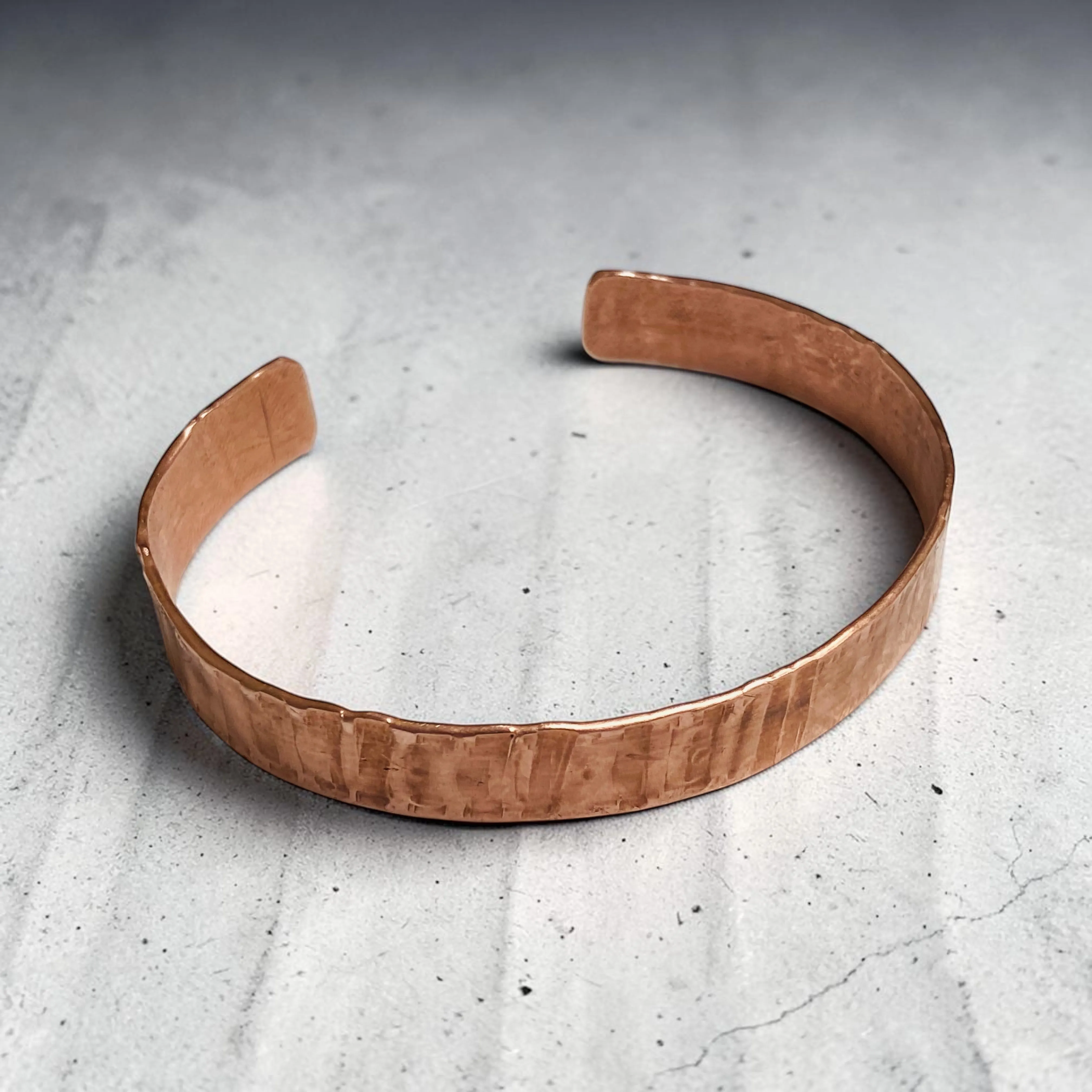
Copper has a substantial feel for its size. A solid cuff or ring often feels more present in the hand than a very thin, hollow, or lightly plated alternative. Still, weight is only a comparison tool. A small copper earring can be lighter than a large plated necklace, and a maker may deliberately shape a raw-copper piece for a lighter fit. Let the feel support the other evidence rather than replace it.
Construction can tell you more. Look for clean bends, intentional hammer marks, comfortably finished edges, and details that make sense for the form. A handmade raw-copper piece may show small variations from the shaping process. That is different from a thin coating bubbling away from a base metal or a finish collecting in a way that looks painted on.
Price belongs in the same category: useful context, not proof. A very low price can be a reason to read the material details more carefully, but it cannot identify metal by itself. The most dependable cue is a seller who describes the material plainly, shows the piece from more than one angle, and answers questions without turning a simple question into a sales pitch.
Do not use green skin marks as an authenticity test
Real copper can leave a temporary green mark on some customers’ skin when moisture, sweat, oils, lotion, or fragrance meet the metal. That is a surface reaction, not a purity certificate. Copper-plated pieces and copper-containing alloys can also leave color behind, while some raw-copper pieces may not leave a mark at all depending on wear, fit, climate, and routine.
It is more helpful to see a green mark as care information. Wash skin gently with soap and water, wipe the jewelry dry, and let products such as lotion or sunscreen settle before putting the piece on. Our guide to copper and green skin marks explains that everyday response in more detail. If a piece causes itching, a rash, swelling, or ongoing discomfort, take it off and seek advice from a qualified health professional rather than trying to solve a comfort issue with a stronger cleaner.
What an honest product page should tell you
A strong listing makes the material easy to understand without asking a customer to infer it from a close-up photo. It names the body metal, describes any plating or finish, and explains whether a clasp, chain, ear wire, or decorative element is made from something else. It also shows more than a single front-facing image. An inside view, a back view, and a clear detail of a closure help customers see the work before it reaches them.
For raw copper, helpful information can be simple: whether the piece is bare copper, whether it has a protective coating, how it may change with wear, and how to care for it. That is enough to set a clear expectation. It is more useful than a claim that copper will stay exactly one color forever, which is not how an exposed metal behaves in daily life.
Be wary of language that is very grand but not very specific. “Premium metal,” “healing copper,” or “luxury finish” may sound reassuring, but none identifies what you are buying. A trustworthy maker does not need to hide the practical details. Material, method, fit, and care all belong in the same honest conversation.
A simple check before you buy
Use this quiet sequence when a listing leaves you unsure. First, read the material description for “solid,” “raw,” “plated,” “alloy,” or a stated metal content. Second, inspect photographs for the inside, back, edges, and fastening points, not only the most polished front view. Third, ask the seller to name the base metal and any non-copper components. Fourth, when you have the piece in hand, look for natural wear and use a magnet only as one supporting clue.
That process does not require chemicals, scratching, or a promise that you can identify every alloy at home. It gives you the information that matters most to a customer: whether the seller has been clear, whether the construction matches the description, and whether the piece is the material you wanted to live with. It also keeps an informed choice from becoming a damaging experiment.
If certainty matters for an antique, a valuable purchase, or a piece you suspect has been misrepresented, take it to a reputable jeweler. Professional testing can identify metal content without turning a favorite piece into a damaged test sample. For everyday purchases, clear disclosure and a few consistent signs are usually the better place to begin.
How Yavaworks helps
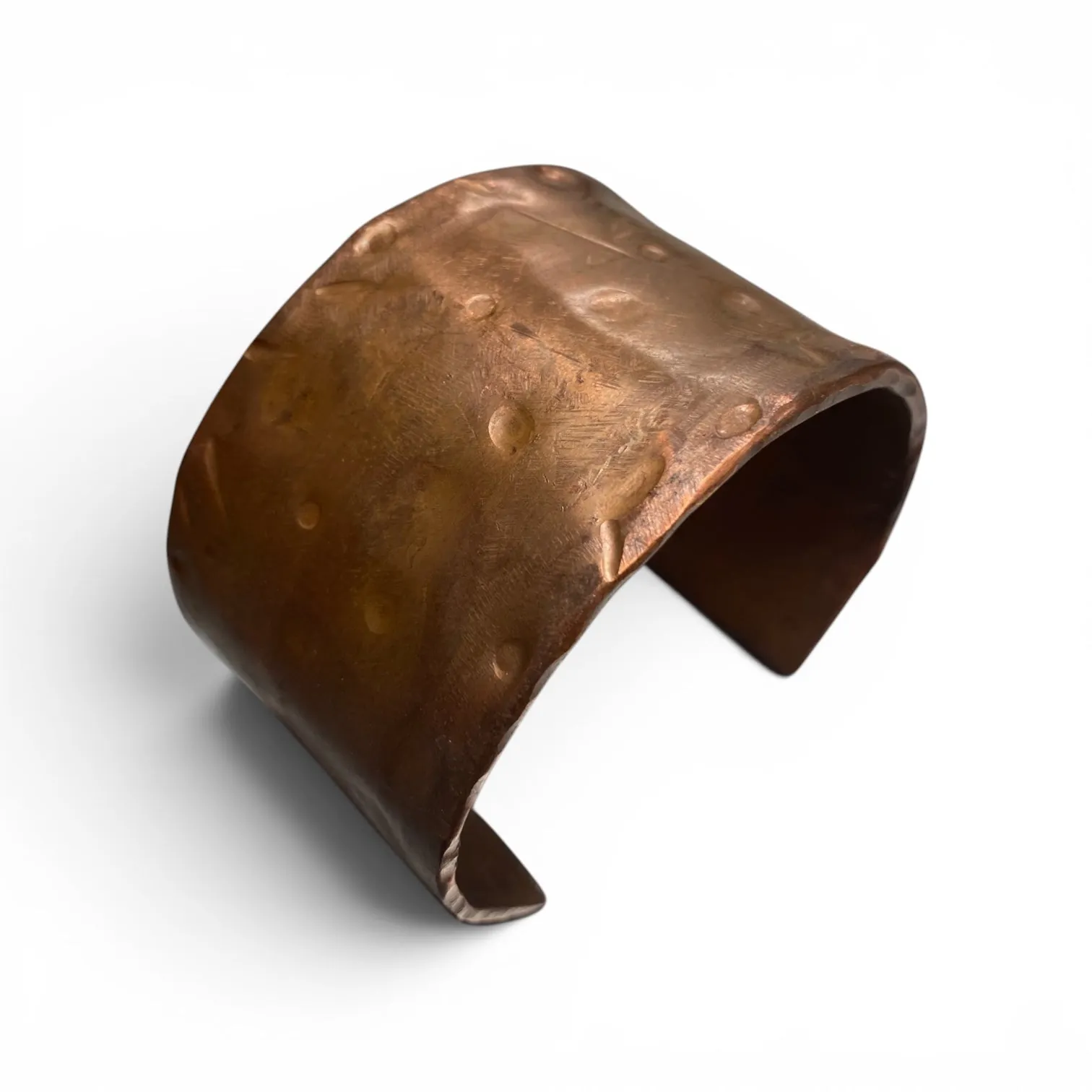
Yavaworks makes raw copper jewelry for customers who want the material itself, along with the warmth, weight, and visible handwork that come with it. Browse the current collection to see available pieces, or explore how the work is made before choosing one. Once a piece is yours, the copper care notes can help you keep its surface comfortable and honest without trying to make it look untouched forever.
Frequently asked questions
Does a magnet prove copper jewelry is real?
No. Copper itself does not stick to a magnet, so a strong pull can reveal steel or iron in the body of a piece. But many other metals and plated pieces are non-magnetic too. Treat the magnet as one useful clue, then check the description, wear points, and construction as well.
Does real copper jewelry turn skin green?
It can, but it does not happen to every customer or every piece. Moisture, sweat, lotion, fragrance, and close contact with skin can leave a temporary green surface mark. That mark does not prove a piece is solid copper, and its absence does not prove the opposite.
Is copper-plated jewelry fake?
Copper-plated jewelry is not necessarily dishonest if it is described clearly. It is simply a different construction: another metal sits beneath a thin copper layer. The problem begins when a listing calls a plated or copper-colored item solid copper without saying what is underneath.
What should I ask before buying copper jewelry online?
Ask what the piece is made of, whether it is solid copper or plated, whether it includes another metal in the findings or clasp, and how the maker recommends caring for it. A clear answer is more useful than a vague promise about color or finish.